• Skip to primary navigation
  • Skip to main content
  • Skip to primary sidebar
  • Skip to footer
  • Site Index
  • Fall Homesteading
  • Shop
    • Profitable Homesteading System
    • Jumpstart Your Homestead
    • Organized Chicken Keeper
    • G.O.A.T. Herd Management System
    • The Ultimate Planner for Breeding Goats
    • Couponing for Beginners Planner
  • Nigerian Dwarf Goats for Sale
    • Nigerian Dwarf Goats
  • About

Mranimal Farm

All About Silkies, Nigerian Dwarf Goats & More

menu icon
go to homepage
subscribe
search icon
Homepage link
  • Site Index
  • Fall Homesteading
  • Shop
  • About
  • Contact
  • ×
    Home

    Blog

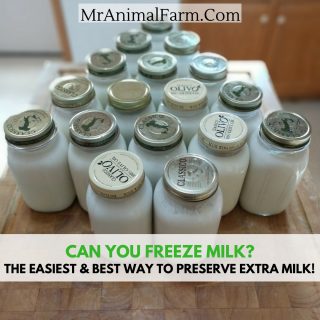
    Can You Freeze Milk? A Fast & Easy Way to Preserve Milk!

    By MrAnimal Farm

    Can You Freeze Milk

    A few years ago, when we were only milking two goats we would use our milk right up.  Fast forward to today, we are milking upwards of 14 goats every day and we are OVERRUN with milk!  So, we need a fast and easy way to preserve all this extra milk.  This left us wondering, can you freeze milk?

    Can You Freeze Milk

    Luckily, the answer to can you freeze milk is a resounding YES!

    Freezing milk is SUPER easy.  It does not take up a lot of time and the quality of the milk stays pretty good.

    You can pasteurize your milk and then freeze it, or if you use your milk raw, you can just freeze milk raw.

    Even if you aren't crazy like us - milking 14 dairy goats a day (assuming you haven't had a decrease in milk production) - you might still have a need for figuring out how can you freeze milk.  Even if you don't milk goats at all, but perhaps find a great sale on milk, you might want to know how freezing milk works.

    One of the main ways that we save money is by shopping sales, using coupons and stockpiling when the price is at a rock bottom.  We have been known to buy tons of something if it is on sale and then preserve the item for later use, like: mozzarella cheese, goat cheese,  freezing blueberries, freezing peppers, freezing mashed potatoes and freezing spaghetti squash.

    There are several general ways that you can preserve food - pressure canning, dehydrating, water bath canning and freezing just to name a few.  We usually have so much stuff going on here that we try to use the FASTEST way to preserve things.  This usually ends up being by freezing the food.

    So,  when we found that we were overrun with milk we found ourselves asking, can you freeze milk? Whatever your reason is - whether you have a bunch of goats you are milking, a milk cow or you just found a banging sale - we have found that freezing milk is the BEST way to preserve milk.

    Ok, so now that we understand that we can freeze milk, how exactly is this done?

    Freezing milk is super easy and you only need a few supplies.

    Supplies for Freezing Milk:

    Funnel

    Milk strainer

    Glass jars

    Quart or Gallon Freezer Bags

    Sharpie

    How Can You Freeze Milk:

    Once you have decided that freezing milk is the best way to go, make sure to gather your supplies and then follow this process.  It is not difficult at all!

    goat milk in several quart jars

    If you have decided to learn how to hand milk your goats, you will have a few more steps to take.

    Preparing to freeze milk -

    1) You will need to filter your milk.

    funnel and strainer in quart jar

    This is pretty simple.  Place the stainer/filter - we like to use this milk filter - into your glass jar.  Then slowly pour your milk through the filter to remove any hair or debris.
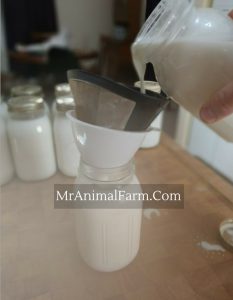
    pouring milk into filter and quart jar

    2) Pasteurize your milk, if desired.

    If you like to pasteurize your milk before using it, you will now want to pasteurize your milk.  Pasteurizing is pretty simple, but it does take a little time.  Here are some easy instructions on how to pasteurize milk.

    If you have already filtered and pasteurized your milk or if you bought your milk from the store, then you are ready to get started on the next steps.

    Here is when we get right to how to freeze milk.

    1) You will want to use freezer bags.

    freezer bag with permanent marker

    We like to use quart bags so that the amount of milk is manageable.  The smaller bags are also easier to find room for in our deep freezer.  However, you can also use gallon freezer bags, if you prefer.

    2) Label and Date the bags.

    Using a sharpie or other type of permanent marker, write the date and what you are freezing on the label area of the bag.  We usually just write something simple like "Goat Milk 6/5/18".
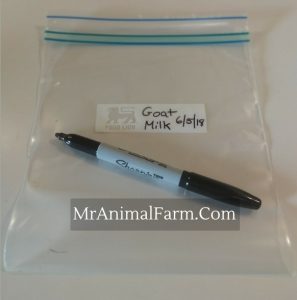
    labeled freezer bag for freezing milk

    Making sure to date the bags as you are freezing milk is important, otherwise you might now know how old the milk is later on.  And although by freezing milk it SHOULD technically be safe long term, after a 6 months is really when quality can start to degrade.

    3) Slowly Pour Milk into Labeled bags.

    We always make sure to have the milk portioned out first.  We like to freeze milk in quart bags, so we have the milk measured into quart glass jars first.
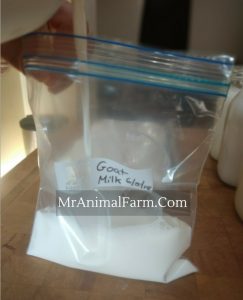
    pouring milk into labeled freezer bag.

    By measuring your milk out before freezing the milk, it makes sure that you don't overfill the bags.  As the milk freezes, it will expand.  So, if you overfill the bags, it can cause them to burst when the milk freezes.

    4) Squeeze Out Excess Air & Close Bag.

    We try to get out all the excess air possible before zipping the bag shut.  Excess air can make it harder to stack the bags of frozen milk.  Having excess air will also cause air pockets to gather in the milk which can be a pain to deal with.

    5) Lay the bags flat in your freezer.

    We try to make sure that when we are freezing milk that the bags are laid flat.  This makes the milk freeze evenly.  Having the milk frozen evenly makes it thinner and easier to stack the bags up later.
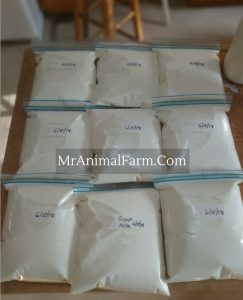
    milk bagged in labeled freezer bags

    How long can you freeze milk?

    Technically, when something is frozen, it should last indefinitely.  However, there is usually a best by timeframe on food products.
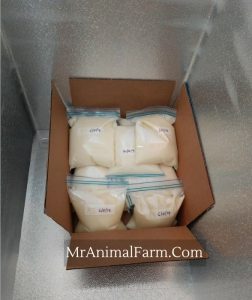
    milk frozen in the freezer

    This means that while it may still be safe to use or eat after the best by timeframe, the quality may significantly decrease. When freezing milk, the accepted best by timeframe is 3 - 6 months.

    Can you Freeze Milk and then Drink it?

    So, maybe you don't do a lot of cooking and you aren't using your milk to bottle feed baby goats or other animals.  You might be wondering if you can freeze milk and then use it for regular drinking.

    The answer is yes, you can drink milk once it has been frozen.  It will have a tendency to separate after freezing.  This means that the cream will separate from the milk.  So it may have a different taste or texture.

    To minimize the separation, be sure to shake the bag well after thawing.

    After freezing milk how long does it take to thaw?

    While you can thaw your frozen milk under running water, that takes time.  So, we usually just pull the bag of milk out the night before we need it and place it in the refrigerator to thaw overnight.

    Thawing frozen milk in the fridge usually takes about 12 hours or so.

    Can You Freeze Milk That is Expired or is Expiring?

    You definitely don't want to be freezing milk that is already expired.  If it has already expired then it should just be tossed out.

    If you are wondering if you can freeze milk that is getting ready to expire, that is up to you.  However, the fresher the milk the better results you are going to get when freezing it.

    Now that you know the answer to can you freeze milk not only is YES, but that it is a simple process you can make sure you don't waste any milk.  You can also be prepared to actually stock up on milk if you find a great sale!

    Learning how to freeze milk has been a fantastic time and money saver for us and should be for you too!

    For more homestead recipes & food preservation:

    [pt_view id="e9197d6btl"]
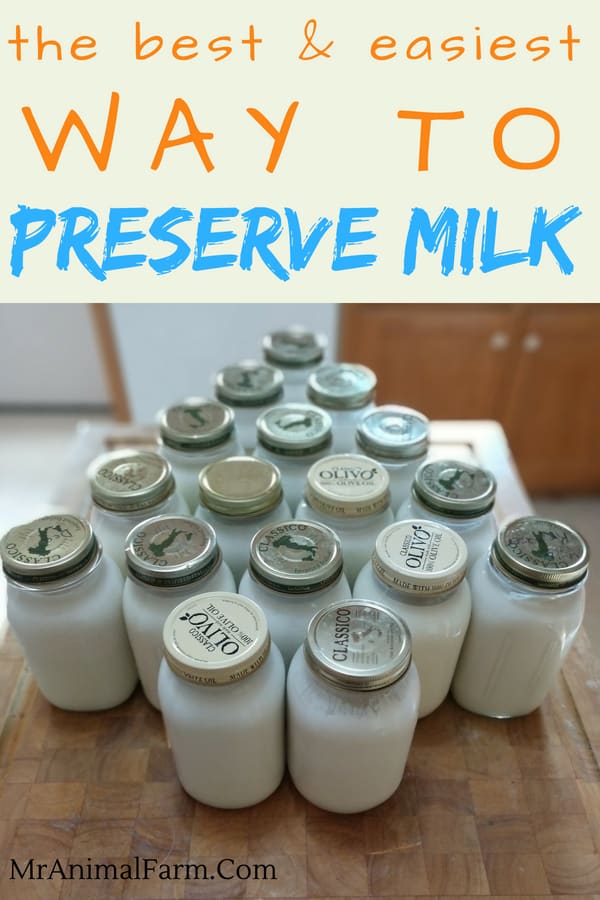
    Can You Freeze Milk

    How to Freeze Blueberries - the Best Way to Preserve Blueberries

    By MrAnimal Farm

    Freeze Blueberries

    Have you ever done this?  You get super jazzed up about something and maybe go a tad overboard.  Then you sit and wonder what the heck you've done!  This happened to me a while back and prompted me to learn how to freeze blueberries.

    A few summers ago I went on a grocery shopping trip and found organic blueberries on sale.  I LOVE blueberries! I am not going to totally embarrass myself by admitting how many pints of fresh blueberries I bought that day.  Let's just say A LOT!

    (We have since learned how to plant blueberries and grow them in our own backyard!)

    I have a hard time turning down a good deal on something I love, what can I say? Plus coupon stockpiling is a super way to save money!

    Well, I got all those delicious blueberries home and had to figure out the best way to preserve my blueberries.  I figured out how to freeze blueberries and will never have to be without them again!

    Freeze Blueberries

    (Since that sale shopping frenzy, I have purchased my OWN blueberry bushes.  So, I still freeze blueberries all the time in the summer.)

    ...

    Read More

    Can You Freeze Eggs?

    By MrAnimal Farm

    Can you freeze eggs

    Can you freeze eggs? You might be asking yourself this if you have backyard chickens who are laying more eggs than you can eat. Or, if you have found a banging sale on eggs and you know that building a coupon stockpile is one way to save boatloads of money.

    a pan of eggs ready to be frozen

    You can freeze LOTS of different foods to help preserve them for later use.  Some examples are:  freezing sweet potatoes, freezing mashed potatoes, freezing peppers, freezing blueberries and freezing milk.

    ...

    Read More

    Summer Farm Activities - Make Sure You're Ready!

    By MrAnimal Farm

    What summer farm activities should you be planning to keep your farm or homestead running smoothly?

    As Spring turns to summer, it will get hotter out and all of the outside activities seem to head into full swing.  Summer is usually a very busy time on a farm.

    Here are a few summer farm activities we do every summer:

    ...

    Read More

    How to tell if a goat is pregnant the easy way

    By MrAnimal Farm

    pregnant goat calling

    Pregnant goat or not?  We get this question in emails a lot.  People asking how to tell if a goat is pregnant.  I also see it on a lot of posts on social media pages - people wondering if a goat they recently purchased is pregnant or not.

    In fact, our first year of goat breeding, we wondered the same thing.

    pregnant goat calling

    How to tell if you have pregnant goat

    We had easily identified the signs of heat in our goats.  And at that point, even though we had been raising goats for a little while, we still didn't own a buck, so we had taken our girls for a driveway breeding at a friends.

    They did their thing, but then we wondered if we had pregnant goats or not? If not, it meant no baby inside which meant no baby goats that year (insert ugly cry face here). So, we had to figure it out right away so we could

    There are a few ways to tell if you have a pregnant doe.  Some are more judgement calls than clinical signs that are likely to give an accurate answer, but not always.  And others are sure fire goat pregnancy signs.

    One way to figure out if you have a pregnant doe is to look for these goat pregnancy signs:

    Signs you may have a pregnant doe

    1) No More Heat

    First of all, pregnant goats will no longer come into heat.  So, if you keep an eye for about 18 - 21 days from breeding and you do not see any sign of heat it is likely that your goat is pregnant.  So this is one of the first early gestation signs to look for.

    This is not always 100% though.  Sometimes goats will short cycle - meaning they are in heat, you breed them and then they come back into heat about a week later.  We have had girls already pregnant (we found this out based on knowing how long goats are pregnant) that short cycled.

    Also, especially towards the end of breeding season, your girls may have a more silent heat the next cycle that you simply just do not notice and think she did not have a heat.

    2)  Udder Development

    Udder development is another way to tell when goats, dairy goats, in particular, are pregnant.  The only thing about udder development is that often times it doesn't happen until later in the pregnancy, much closer to kidding time.  In fact, it is one of the main goat kidding signs.

    Typically, but not always, First Fresheners (girls who are pregnant for the first time) will start their udder development and milk production sooner in pregnancy.  So, sometimes they are a little easier to look for this sign.  Generally, it will look like their udder is slightly swollen and not a full milk bag.

    However, we have had tricky ones that didn't get an udder until a week before kidding.

    3)  Changes in Behavior

    Changes in behavior is one of the early signs you can look for.  But, it can be really hard to tell based simply on behavior unless you know your specific goats.

    For example, we have one goat who I ALWAYS know if she is pregnant based on her behavior.  She is normally really easy going and likes to be loved on.  As soon as she is pregnant, she will NOT let me touch her.

    As she gets further into her gestation period, she will begin acting uncomfortable more and more up until her due date. She will exhibit the behavioral changes even if she has just a single baby goat. We were surprised when we found that it wasn't meaning multiple babies inside.

    So sometimes a pregnant goat can have pretty significant behavior changes.  Which we can chalk up to all those hormones 😉

    4)  Weight Gain

    Another goat pregnancy sign, is weight gain.  Just like humans, goats will also gain weight when they are pregnant.

    Also, just like humans, the amount of weight gain is different for each goat.  So, if you are looking for a sure fire way to tell if a goat is pregnant this is not always the way to do it.

    Some goats get very obviously pregnant and there is no doubt they are carrying kids.  However, some goats, at most, get, what looks like, a slightly swollen abdomen or do not really gain much, if any, weight at all.

    We had one girl who's body didn't really change at all to the point we thought she was not bred - it was a BIG surprise when we went out one night to find her nursing her brand new little girl!

    5)  Cervical Mucus

    This one is closer to a clinical sign than a judgement call but if you're seeing this it most likely means she's pregnant and you are pretty far into her average gestation period

    Want to know how to tell if a goat is pregnant without any doubt?

    So, we just covered 4 goat pregnancy signs that can POSSIBLY tell you if you have a pregnant goat.  But what if you don't want any doubt?

    There are two ways to tell without a doubt that your goat is pregnant.  Both involve using a goat pregnancy test.

    Types of Goat Pregnancy Tests:

    1) Blood tests

    A blood test is a way to tell if your goat is pregnant without a doubt.  The benefit to this goat pregnancy test is that it can be done on any goat at any time.

    The cons to using blood tests is that unless you are well-versed in drawing blood, you will have to pay for a vet to draw the blood on top of the charge to do the pregnancy test.

    2) Milk Test

    A milk test is the second type of goat pregnancy test that you can use.  This type of test is super simple, you can go through a provider like Dairy One.  They send you vials, you fill them with milk and mail them back and it is really inexpensive.

    Of course, you can only use a milk test if your doe is still in milk when you want to check for pregnancy.

    Hopefully by following some of these tips, you can figure out  more easily if you have a pregnant goat!  And that way you can be sure to be prepared for your kidding time.

    Chickens That Lay Green Eggs - What Chickens Lay Green Eggs?

    By MrAnimal Farm

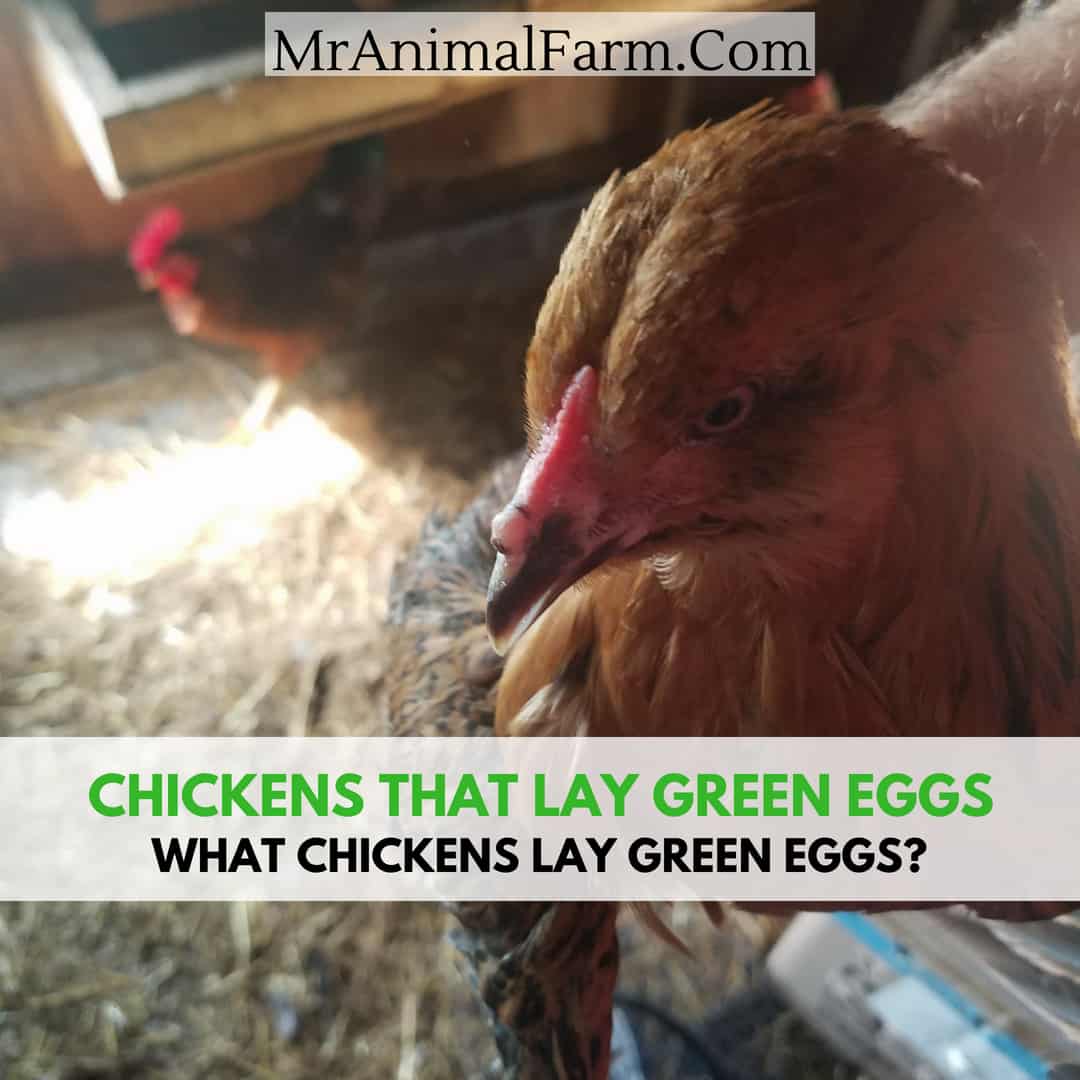
    Chickens That Lay Green Eggs - What Chickens Lay Green Eggs

    There are so many chicken breeds in the world, that it should come as no real surprise that there are chickens that lay green eggs.

    Easter Egger with Chickens That Lay Green Eggs text on image

    Afterall, there are other chickens that lay colored eggs, frizzle chickens, bantam chickens, salmon faverolle, and all sorts of other fun types of chickens.  So, getting green chicken eggs is not too much of a stretch.

    We have all kinds of different breeds in our layer flock, and when we started getting our flock together, we intentionally added in some chickens that lay green eggs.  We wanted to get all the different possible egg colors from our chickens.

    Keep reading to find out exactly what breeds you need to get to have green eggs in your basket as well as FAQ about how green eggs are made and if they are different than other colored eggs.

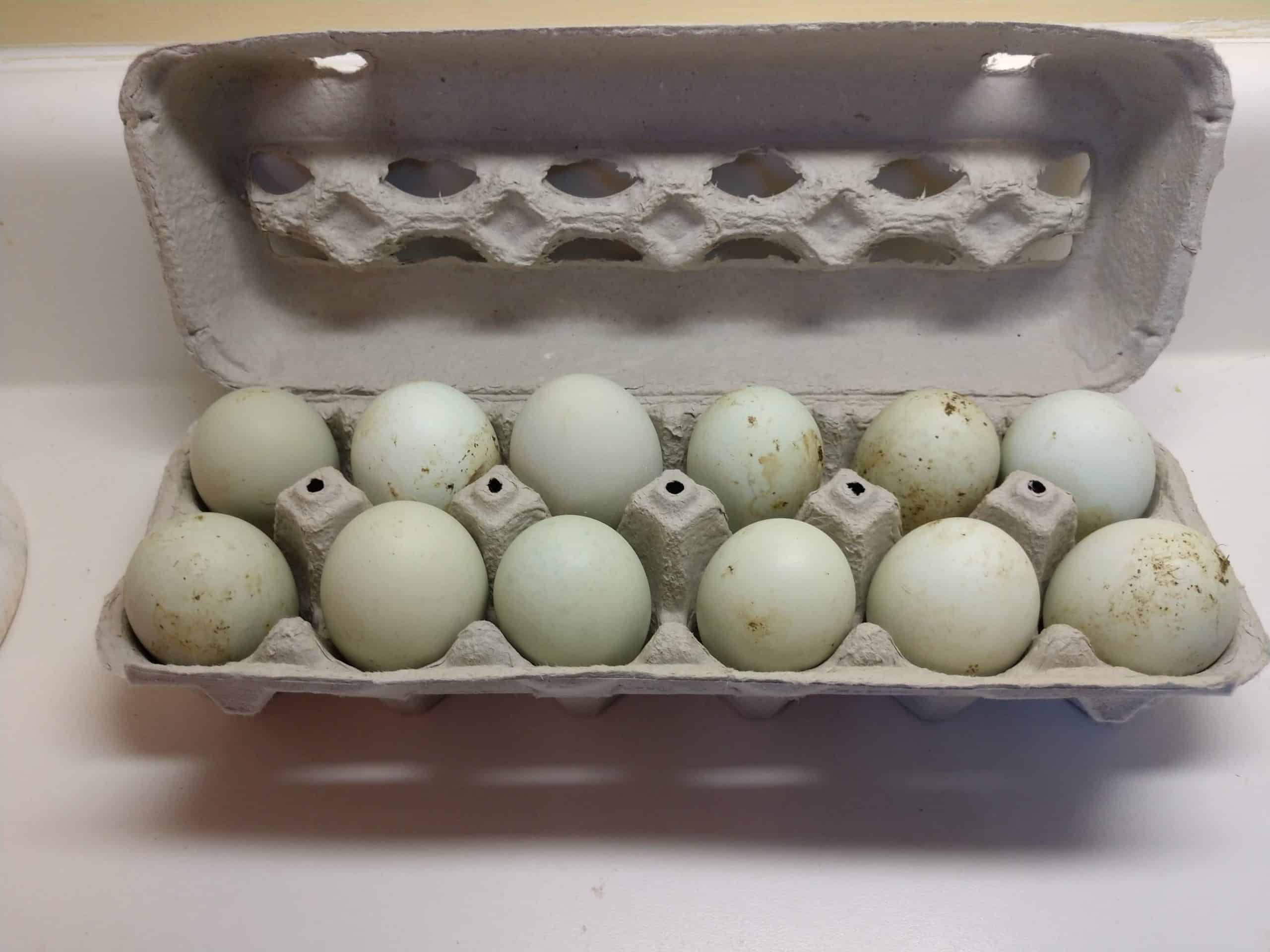
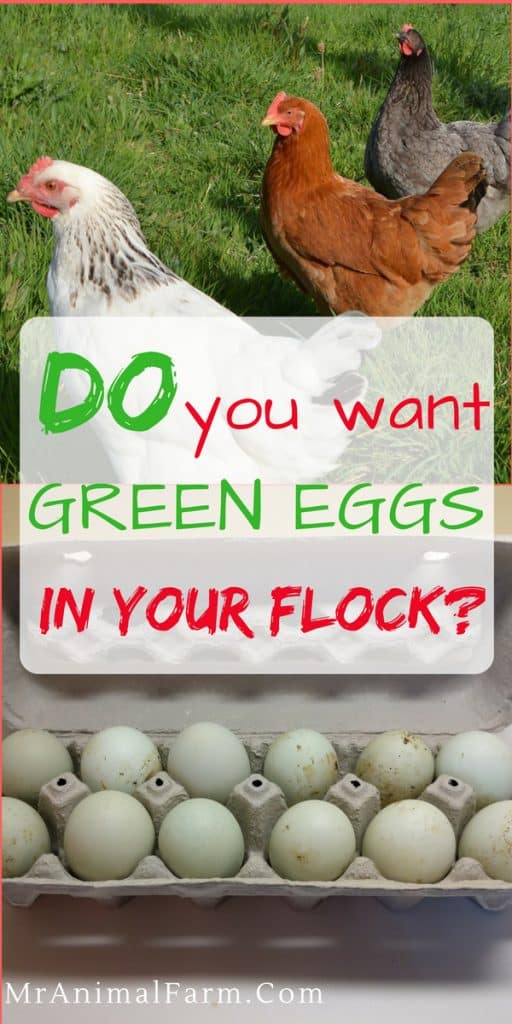
    full carton of green eggs
    [feast_advanced_jump_to]

    What Chickens Lay Green Eggs?

    • Isbar
    • Easter Egger
    • Favaucana
    • Olive Egger
    • Green Queen
    • Steele Egger
    • Sage Gem
    • Ice Cream Bar

    All of these breeds except the Isbar are hybrid chickens. That simply means, they are not a purebred chicken, but are a cross of two different breeds.

    Green eggs have become so popular that a lot of breeders and hatcheries are developing their own "breed" by regularly combining the same two breeds together to create a more standard offspring.

    Like with any hybrids, their actual qualities can vary, but when a breeder or hatchery work with the same lines they can create a much more predictable result.

    Isbar

    Isbar's may be the one purebred chicken that lays green eggs.  They were developed in Sweden and lay varying colors of green eggs, sometimes with brown spots.  Isbar's are considered a rare breed.

    Another interesting fact about Isbars is that they are autosexing - this means that you can tell the sex of the chicks at hatch.

    Easter Egger

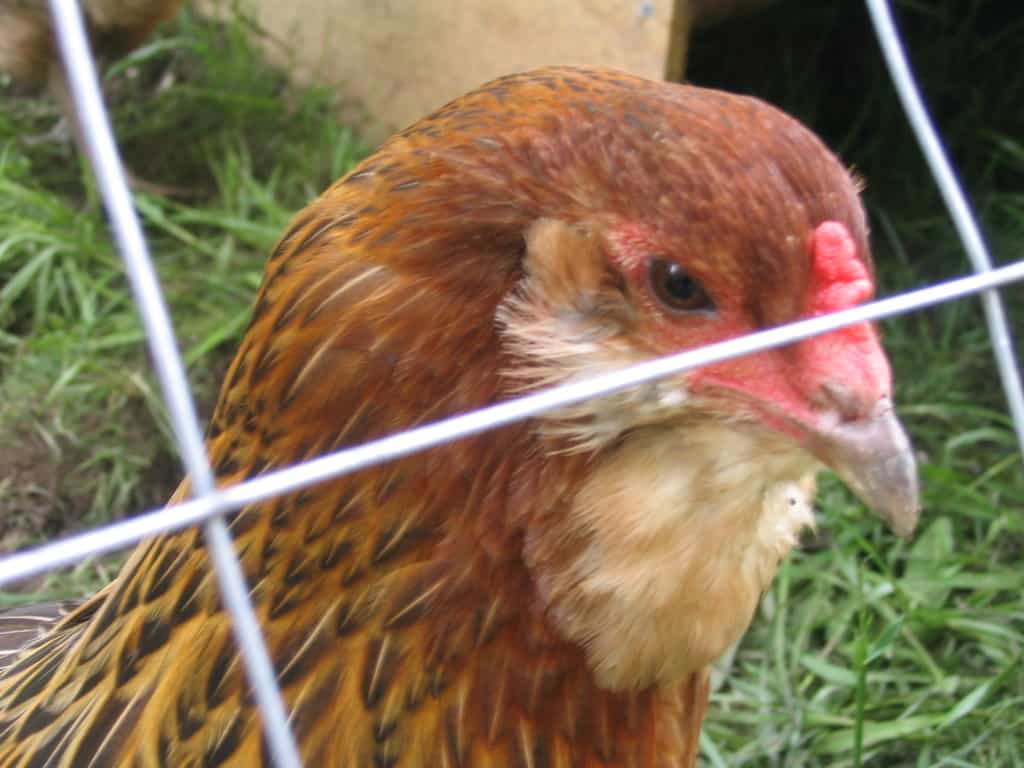
    Easter Eggers, while commonly referred to as a breed are not a purebred chicken.  They are simply a cross of a blue egg layer with a brown egg layer.

    Easter Eggers are above average year round layers of medium sized green eggs. Make sure you know how to tell Easter Eggers Vs Ameraucanas as often times you will see them mis-labeled at feed stores.

    Easter egger hens outside
    Our Easter Eggers mingle with some of our other hens

    Favaucana - Faverolles x Ameraucana

    Favaucana's are one of the types of chickens that lay green eggs which is also technically an Easter Egger.  You can make your own Favaucana's by breeding faverolles and Ameraucanas.

    Or, you can order them at some hatcheries like MyPetChicken.

    Favaucana
    By VanTucky [CC BY 1.0 (https://creativecommons.org/licenses/by/1.0)], from Wikimedia Commons

    Olive Egger

    Technically speaking an olive egger is a type of Easter Egger.  Olive eggers are, as you can probably guess by their name one of the chickens that lays green eggs which are a dark olive green in color.

    Olive Eggers are a cross of a chicken that lays blue eggs (like a cream legbar or an ameraucana) with a chicken that lays a dark brown egg (like a Marans or a Welsummer).  The blue egg has the brown tint added on making the egg appear olive green. 

    To get darker olive colored eggs, simply mix in chickens that lay darker chocolate colored eggs.

    Need some help keeping your chickens health and care taken care of? Check out the Organized Chicken Keeper for an easy to follow system.

    Green Queen

    This is yet another hybrid chicken. Really, this could be considered a type of Easter Egger

    Green Queens lay about 4 - 6 eggs per week and are very hardy. They can have feathered legs, muffs and beards as well. They come in both standard/large fowl and bantam sizes You can find these at Meyer Hatchery.

    Steele Egger

    These are again a hybrid bird that has recently been developed for the purpose of laying lots of green eggs. They were created by Lisa Steele at Fresh Eggs Daily.

    These are beautiful blue or splash colored chickens which most often have funky crests on the top of their heds. They produce about 3 -5 eggs per week.

    Sage Gem

    Another in a long list of hybrids green egg layers. The Sage Gem is a bantam chicken .

    This breed lays sage green (hence their name) eggs. However, as with most hybrids, they can vary a bit from that sage green all the way to a brown-earthy tone colored egg. They are generally good layers at around 4 -6 eggs per week.

    They are a fun little chicken that can have feathered legs, crests, beards and muffs.

    Ice Cream Bar

    This hybrid is made by crossing Isbars and Cream Legbars. The resulting chicken will lay a beautiful aqua colored egg.

    This is a super fun breed that lay around 4 - 6 eggs per week or 240 per year. They tend to follow the traits of their parents by being wonderful foragers with easy going personalities.

    What Makes Green Eggs?

    If you have read about how chickens make blue eggs, you may have a bit of an idea as to how green chicken eggs may come about.  All eggs start out white in color.

    The egg color differences then come about by pigment being added to the shell during the time that the egg passes through the chickens oviduct.  When and what kind of pigment is added determines the ultimate color of the egg. (source)

    Most chickens that lay green eggs have a blue egg base that then gets a brown egg tint put over top at the end of the egg formation process. (source) This results in green chicken eggs!

    Why Would you Want Chickens That Lay Green Eggs?

    The main reason to get chickens that lay green eggs is just to add a little fun and color to your egg basket.  Also, if you are trying to make money raising chickens colored egg layers are always a popular choice for chicks to sell.

    Another cool thing to having chickens that lay green (or other colored) eggs in your flock is it can help you tell which chickens are and are not laying.

    Are Green Eggs Different Than Other Eggs?

    Green chicken eggs are obviously different than other eggs in color.  That's the whole point, right?  But in terms of taste, nutrition and all of the actual egg components, no, green eggs are no different than other eggs.

    Additionally, chickens that lay green eggs start laying eggs around the same time as other chicken breeds. Make sure you know the signs a chicken is ready to lay eggs so you know when to start looking for your first eggs.

    If you need more help with taking care of your chickens, check out The Organized Chicken Keeper for a complete system for managing their health through keeping their supplies stocked and coop clean.

    Access The Organized Chicken Keeper Here
    Chickens That Lay Green Eggs - What Chickens Lay Green Eggs

    DIY Chipotle Burrito Bowl

    By MrAnimal Farm

    Chipotle Burrito Bowl

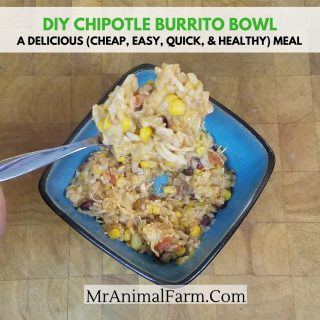
    I don't know about you, but I looooove Mexican food. In fact, I would say I eat some form of Mexican cuisine almost every day of the week. One of my absolute favorite things to eat is a Chipotle burrito bowl.

    Chipotle Burrito Bowl

    One reason I can eat it so often is because it is super cheap, easy to make, and quick to cook in the Instant Pot. Want to learn how you too can eat a delicious, cheap, and healthy meal as often as you like? Keep on reading!

    chipotle Burrito Bowl

    ...

    Read More

    The Complete List of Coupon Terminology - Learn Couponing Lingo

    By MrAnimal Farm

    Coupon terminology

    Coupon terminology

    Couponing is a fantastic way to save money.  However, learning how to start couponing can be a little overwhelming.  I like to think I am a pretty quick learner most of the time, but I will readily admit, when I started couponing looking at all of the coupon terminology was WAY over my head.

    Let's be honest, it is kind of like reading and learning a foreign language.

    I mean, c'mon - SS, RP, MQ, BOGO - coupon terminology reads like some secret code of abbreviations that you need a super secret decoder ring to understand....

    Read More

    Where to Find Coupons - 4 Main Coupon Sources

    By MrAnimal Farm

    Where to Find Coupons

    Where to Find Coupons

    So, you have decided that you want to start couponing but, you aren't sure where to find coupons.  It may seem overwhelming, believe me, I understand!

    When I first started couponing and had to learn all of the couponing terminology, all of the different store rules and everything else involved with couponing it seemed like I may never master it all!

    ...

    Read More

    Cheesy, Beefy Spaghetti Squash Casserole - Gluten Free

    By MrAnimal Farm

    Cheesy, Beefy Spaghetti Squash Casserole you say?!  Why, yes, I would like some of that!  We love to find gluten free noodle alternatives (like these black bean noodles) to cook with and spaghetti squash is one of the best that we have found.  We are also big fans of crockpot meals and casseroles.  Why?  Well, there is really nothing nicer than spending a few minutes to prepare a meal, popping it in an oven (or crockpot) and then being able to eat a few meals from that one cooking time.

    You may also like:  Zuchinni Noodle Casserole

    Ok, let's get right to it, our Cheesy, Beefy Spaghetti Squash Casserole

    Ingredients

    1 large Spaghetti Squash

    1 pound of beef

    1 bag (16oz) of shredded cheese


    Salt and Pepper to taste

    Cooking Instructions

    1.  Bake your Spaghetti Squash.
      1. Slice it in half and place on a cookie sheet
      2. Bake at 350 degrees until tender.  This usually takes about 45 minutes.
    2. While your squash is baking, get your beef cooked.
      1. Add beef, salt and pepper to a fry pan and sautee on medium.
      2. Cook beef until it is well done.
    3. Once your Spaghetti Squash is cooked, you will use a fork and scrape out the flesh (it will look like little noodles!)
    4. Mix your beef and Spaghetti Squash noodles together in a casserole dish.
    5. Top beef and noodle mixture with cheese.
      1. if you love cheese, you can also mix cheese in with the beef and noodles to use the entire bag of cheese.
    6. Bake your cheesy, beefy spaghetti squash casserole on 350 for about 25 - 30 minutes (cheese should be melted).

    This dish, like most of our favorites, is also yummy re-heated so you can eat it for a few meals if you like.  Sometimes we will make a larger pan of it so that we do have plenty of leftovers.

    If you decide to try this dish let us know in the comments below what you think of it!

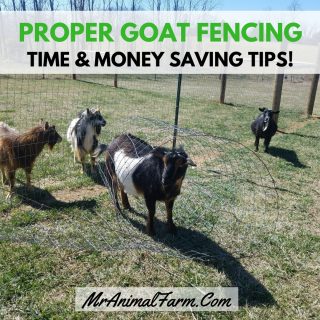
    Proper Goat Fencing - Time & Money Saving Tips!

    By MrAnimal Farm

    Proper Goat Fencing

    Proper Goat Fencing

    Looking to find out more about proper goat fencing?  We have learned a few (important) lessons about what goat fence to use and what goat fencing to NOT use.

    Goat fencing is something that we have talked about previously.  To see our reviews of several goat fencing types, click here.  Since our initial goat fencing review, we have added several goats to the herd.

    As part of these herd additions, we added two bucks.

    Proper Goat Fencing

    Now, as you may know, you usually keep bucks separate from does.  To do this, we built a buck house (a simple shed) and partitioned off a part of the does pasture.

    Sectioning part of the pasture off for the boys, of course, meant putting up more goat fencing.  At the time, like usual, we were trying to think about saving time as well as money while building the buck pen.

    Want more info about getting your start with goats? Check out the Raising Goats eCourse and eBook....

    Read More

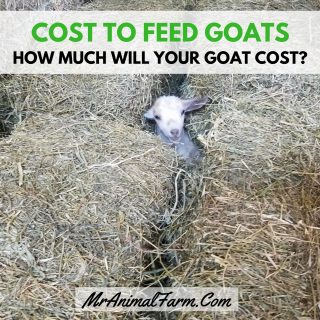
    Cost to Feed Goats - How Much Does a Goat Cost?

    By MrAnimal Farm

    Cost to Feed Goats

    Cost to Feed Goats

    How much does it cost to feed goats?

    It is important to know what the cost to feed goats is if you are thinking about getting goats.  I mean, you can't really add something to your life without knowing what the cost will be....

    Read More

    Easy Zucchini Recipes - 5+ Ways to Use Zucchini in Recipes

    By MrAnimal Farm

    zucchini chips

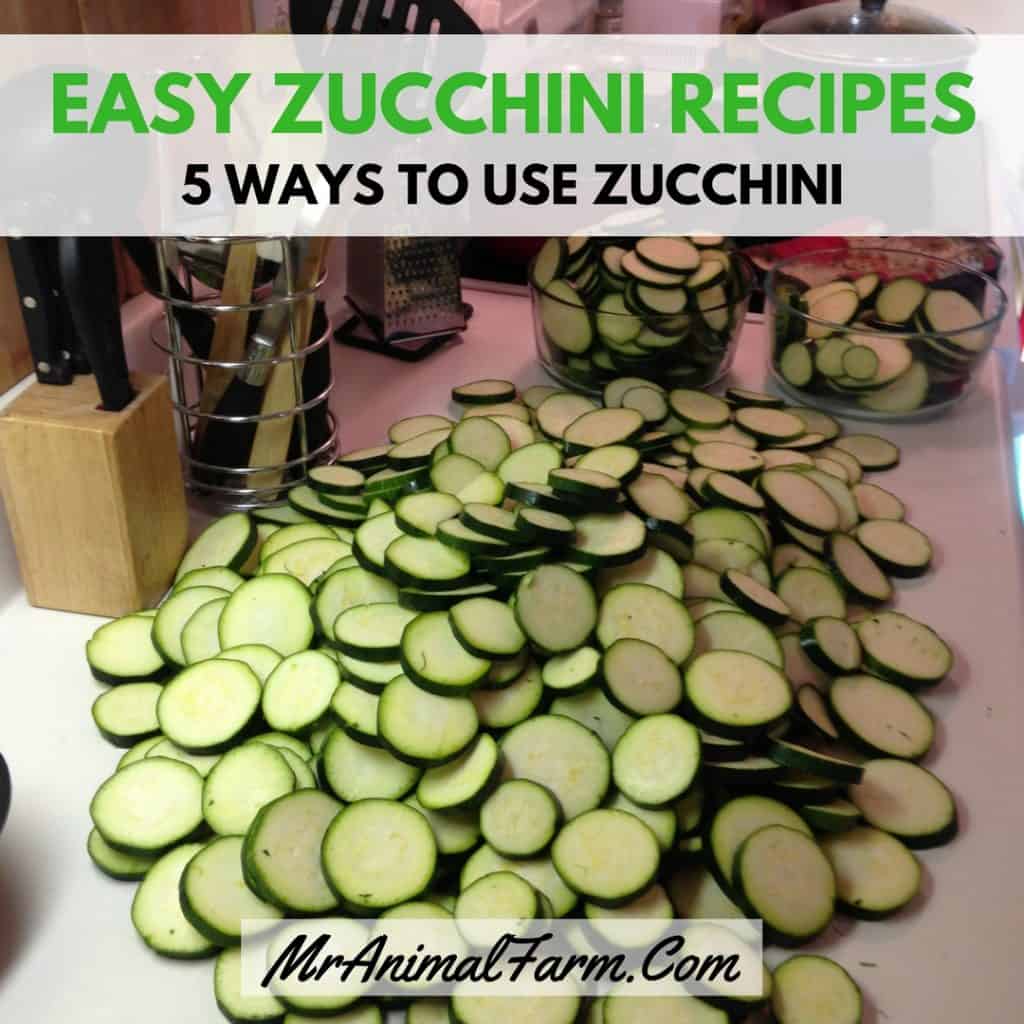
    There are so many easy zucchini recipes to make!  If you garden, eat gluten free or just LOVE zucchini then you might be looking for new ways to use zucchini in your everyday recipes.

    zucchini chips

    Our first year gardening we quickly realized while growing zucchini it is one of the crops that just produces in abundance.  This is great, but no matter how much you LOVE zucchini, it can get boring eating it the same way every day.

    So, we came up with some easy zucchini recipes

    1. Zucchini Noodles

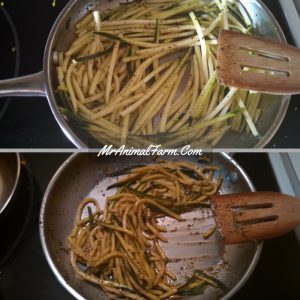
    Are you gluten free and missing your noodles?  You can use a mandolin slicer to cut your zucchini into noodles.  Then cook the noodles up in a pan on the stove in a little oil and any spices you like.  We like to add a little garlic and oregano.

    zucchini noodles cooking in pan
    Zucchini Noodles

    2. Zucchini Noodle & Beef Casserole

    If you want to do a little something more with your zucchini noodles than just use them as a side dish, you can try them out in a cheesy beef casserole.

    Easy Zucchini Recipes
    Zucchini Beef & Noodle Casserole

    3. Zucchini Chips

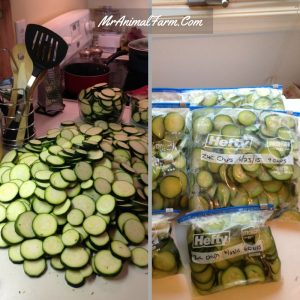
     You can slice up your zucchini into round chips and use them in place of regular chips.  We really love to use zucchini chips to make zucchini nachos.  They are easy to make, delicious and they re-heat really well if you want to make enough and freeze zucchini for a few meals all at once.

    Easy Zucchini Recipes
    Zucchini Chips

    4. Zucchini Lasagna

    You will be shocked how close this is to a standard lasagna recipe. For this easy zucchini recipe, you can either use zucchini chips or you can make long sliced noodles (slicing the entire length of the zucchini, so that they resemble real lasagna noodles).  You can then add your normal lasagna toppings as you like.

    Easy Zucchini Recipes
    Zucchini Lasagna

    5. Zucchini Pizza

    For this, you will simply slice your zucchini in half.  You can then put it on the grill and grill it until it is soft.  Then top it with your favorite pizza toppings.  We love to do chicken, pesto and mozzarella.

    Easy Zucchini Recipes
    Zucchini Pizza (so good I can't even take a clear picture)

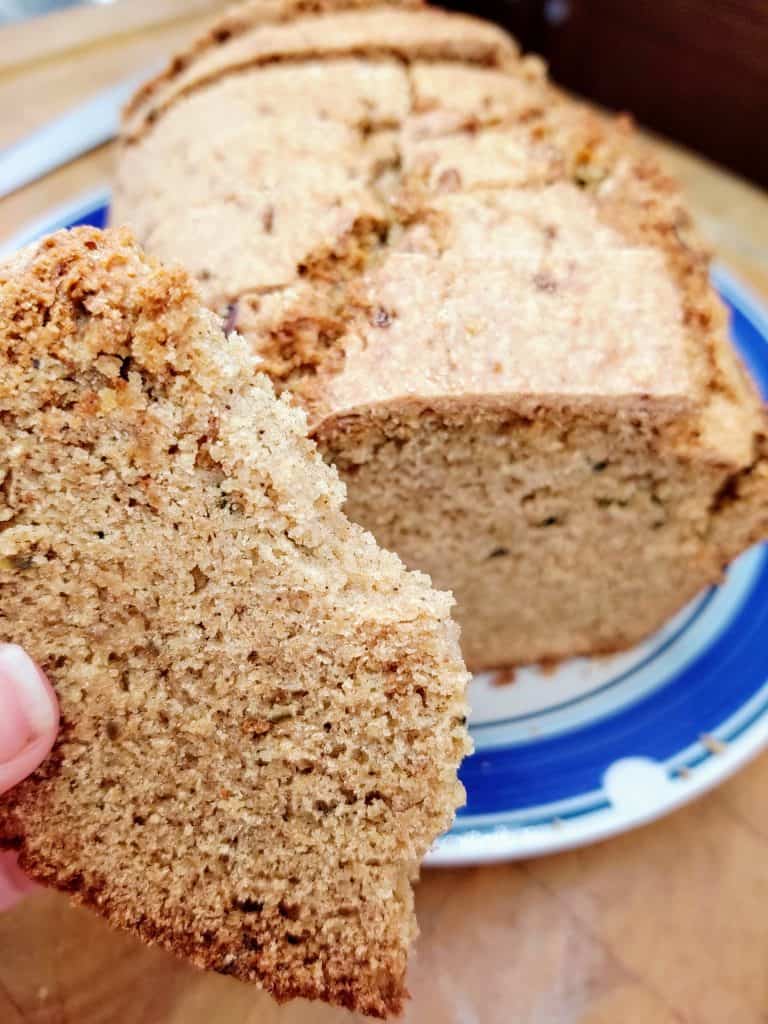
    6. Zucchini Bread

    Make yourself a wonderfully sweet treat. This zucchini bread recipe, along with our banana bread and pumpkin bread recipes, is one of our favorite things to make.

    close up slice of zucchini bread with bite taken out

    The best part is you probably already have all the ingredients in your pantry staples. You can take the pantry challenge to find out.

    Tell us about some of your favorite ways to use zucchini below or which easy zucchini recipe you want to try!

    pinterest image of zucchini chips with text reading, "5 easy zucchini recipes"

    Try some more of our great recipes!

    [pt_view id="e9197d6btl"]
    Goat Milk & Honey Soap Recipe

    By MrAnimal Farm

    We are so excited to welcome a guest post this week!  Goat milk soap is a great product that you can easily make at home.  Below, you will find an awesome recipe so that you can make your own.  But first, a little about our guest poster.

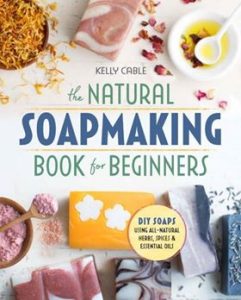
    Kelly is the creator of SimpleLifeMom.com and author of The Natural Soap Making Book for Beginners. She's been making homemade bath and beauty products for almost 15 years (find them in her shop) and regularly shares recipes to replace unhealthy and overly processed foods and home products with handmade and healthy items that anyone can make.

    Goat Milk and Honey Soap Recipe

    I’m so excited to share with you a recipe from my new book, The Natural Soapmaking Book for Beginners. I’ve put together over 55 recipes, as well as soap tutorials and charts for coloring and decorating soap naturally with herbs and nourishing ingredients.soapmaking for beginners

    This recipe is for a goat milk and honey soap. Both goat milk and honey are wonderful ingredients for soap making because they make a bubbly bar that moisturizes as it cleanses.

    Goat milk is high in vitamins, minerals, and is naturally anti-bacterial. It also has a lot of alpha-hydroxy acids that naturally break down bonds between live and dead skin, helping to cleanse your skin beautifully and help your skin look stronger and healthier.

    Honey is another wonderful ingredient. It makes great bubbles in a bar and is a natural humectant. A humectant can actually absorb moisture from the air and help it to cling to your skin in a light, nourishing way.

    I tried to design all of my recipes with ingredients that are easy to come by (like lard and olive oil) and, of course, good for you.  I hope you really enjoy this gentle, moisturizing goat milk and honey soap recipe.

    Goat Milk and Honey Soap by Kelly Cable

    Yield: 3 pounds or twelve 4-ounce bars

    Lye Discount: 15%

    Label: Moisturizing,

    Start to Finish Time: 2 hours, 24 hours in mold, 4 to 6 weeks to cure

    Scent: Orange

    Though a Castile bar was the first soap recipe I made, I dreamed of making a Goat Milk and Honey Soap bar. Well, here it is. Using milk and honey in a recipe means you need to be aware of a few more things, but it’s pretty easy once you get the hang of it. Enjoy the many nourishing benefits of this soap!

    Equipment list:

    Large stainless steel pot

    large spoon

    scale

    bowls for measuring ingredients

    thermometer

    stick blender

    small zip top bag

    glass or plastic bowl for lye water

    mold

    parchment paper

    rubber spatula

    measuring spoons

    Ingredients:

    •         10 ounces olive oil
    •         8 ounces lard
    •         8 ounces coconut oil
    •         4 ounces sweet almond oil
    •         2 ounces beeswax
    •         4 ounces lye
    •         8 ounces filtered water
    •         4 ounces goat milk
    •         1 ounce orange essential oil
    •         1 Tablespoon raw honey

    Safety First!

    Remember to wear your safety equipment and mix the lye water outside.

    Tell everyone you live with that where you're working is off limits.

    Give yourself enough time to complete the recipe.

    Prep Ahead: Combine the water and milk in a large glass, plastic, or stainless steel container. Place milk-water into the freezer for 1 to 2 hours. It is okay if a slush forms, as long as it doesn’t freeze. The colder your milk-water, the lighter your soap will be after adding the lye.

    Instructions:

    1. Heat the Fats/Oils: In a large pot over medium-low heat, combine olive oil, lard, coconut oil, sweet almond oil, and beeswax. Heat until they are melted and incorporated. Remove from heat and allow to cool to 90-100°F.
    2. Mix the Lye-Water: Put on protective gear including a mask, gloves, and long sleeves. Outside, very slowly pour only ¼ of the lye into the milk-water and stir until dissolved. Let cool for 20 minutes. Repeat until all lye is dissolved into the milk-water. If milk still browns, don’t worry. Your soap will just be darker.  Allow to cool to 90-100°F. If oil or lye water cool at different rates, you can use a cold or hot water bath in the sink.
    3. Prepare the Mold: While the oils and lye water cool, line the mold with parchment paper.
    4. Combine and Bring to Trace: When both oils and lye water are around 90-100°F, pour the lye water into the pot of oils. Use a stick blender or hand mixer to mix for 1 to 2minutes and then let the mixture rest for 4 to 5 minutes. Repeat mixing and resting until light trace.
    5. Mix in Natural Additives: When soap reaches light trace, add essential oils and honey and blend for 30 seconds.
    6. Mold the Soap: Pour the soap mixture into the mold, cover with a lid or parchment paper for 24 hours. Do not insulate unless your house is below 75°F, then insulate by placing a towel around the outside edges to avoid a partial gel.
    7. Cut and Cure: Remove soap from the mold. If it seems too soft to remove, wait another 12 to 24 hours before removing. Cut the soap into twelve 4-ounce bars. Allow the bars to cure for 4 to 6 weeks.

    Tips: Milk can scald when lye is added. Placing the milk-water in the freezer until it’s very cold helps prevent this. Be sure to add lye slowly. It is okay to really take your time, coming back every 20 minutes to add a little more. Adding milk can also make your batch get hotter than usual, so just insulate a milk recipe lightly with a towel if you’re concerned about getting a good gel for color. Honey can also make soap come to trace faster, so add it and blend really well right before pouring soap into the mold.

    Soap Making Bonus Collection

    For a limited time, when you preorder my book, The Natural Soapmaking Book for Beginners,  you can also get a Collection of Free Soap Making Bonuses. Within this bonus collection is:

    • Multiple how-to videos
    • Herbal and Soap Giveaways
    • Download soap labels
    • Download a chart on blending essential oils
    • A Discount to my Etsy Shop
    • A Bonus Recipe!

    You can learn more and get these Bonuses by going HERE.

    For More on Homesteading, Check these out:

    [pt_view id="1b72340sjr"]
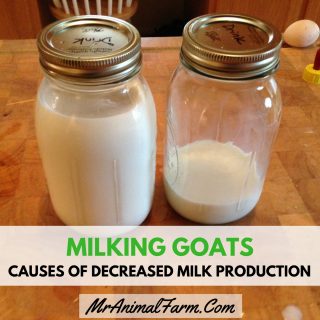
    Milking Goats - Causes of Decreased Milk Production in Goats

    By MrAnimal Farm

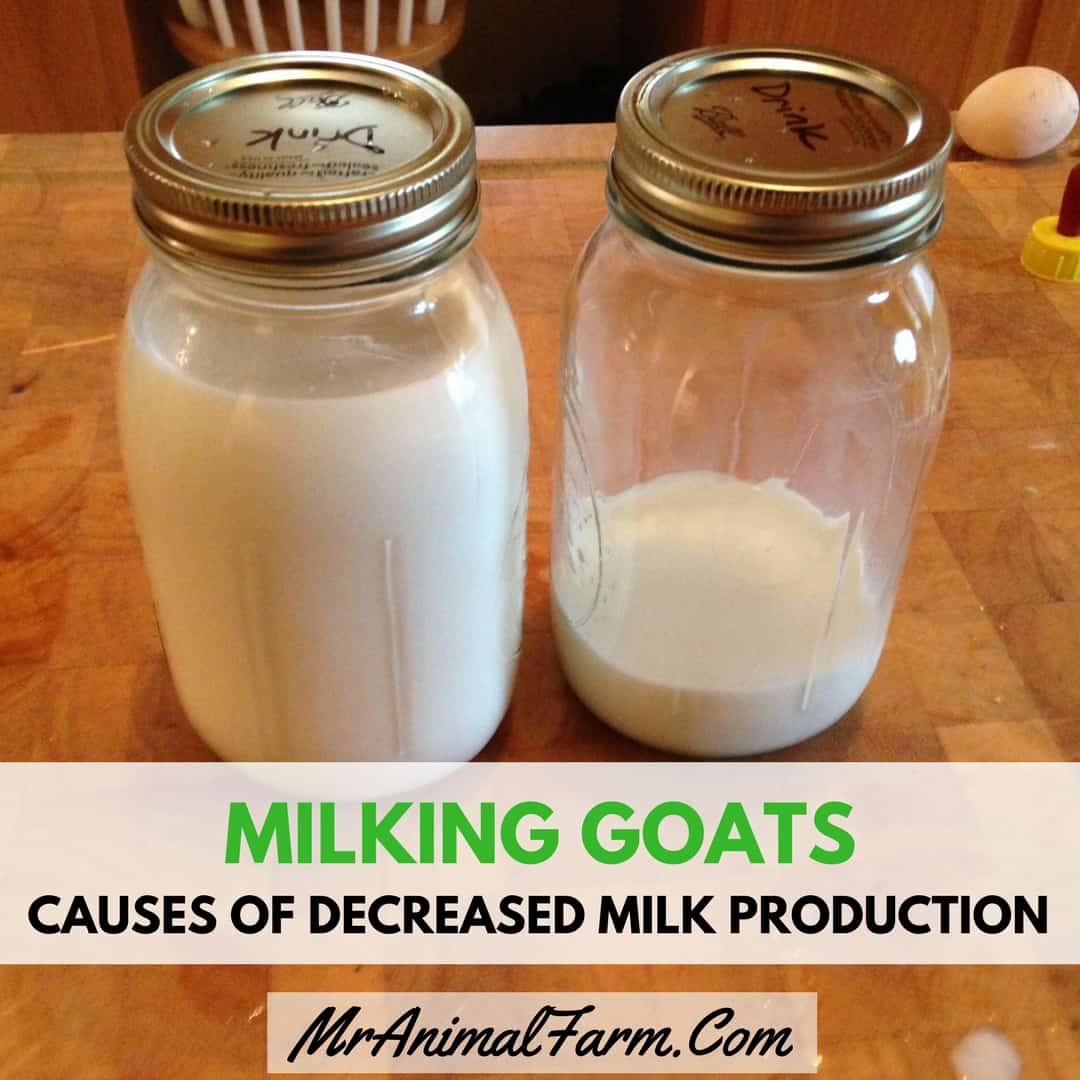
    Milking Goats – Causes of Decreased Milk Production in Goats

    Milking goats will of course be on your list of farm chores if you are breeding dairy goats.  In order to keep your milk production in tip top shape, you'll need to know what causes decreased milk production in goats. And, if you experience a decrease, way of increasing milk production in goats.

    Keep reading below for all the milk maximizing tips.

    feature image for Milking Goats – Causes of Decreased Milk Production in Goats. close up of 2 mason jars of milk

    If you are milking your goats that means that you will be breeding your goats as well!  Make sure to have a solid goat breeding plan before getting started.

    Causes of Decreased Milk Production in Milking Goats:

    There are several reasons that your goats might have decreased milk production - some are normal and inevitable while others could mean that your goats need some change or attention.  So, let's review, shall we?

    1. Time since freshening

    When a goat first kids (has babies), they will come into milk.  Their milk production will slowly increase over the first few weeks as the babies grow and have a higher milk supply demand.

    However, once the kids are of weaning age, eventually, the goats milk production will decrease naturally.  This natural decrease in milk production usually occurs a few months (around 4 - 5) after kidding.

    How to increase their production: Make sure to re-freshen your goats about once a year, assuming their health is good. Additionally, if you want milk year round, stagger when your goats kid so they are not all hitting maximum production at the same time.

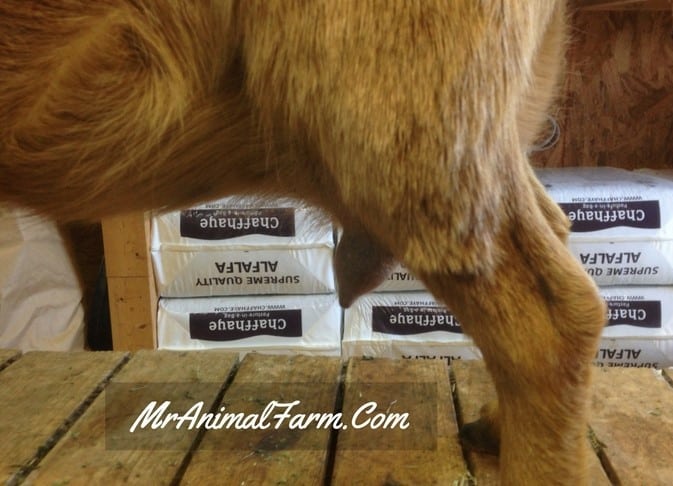
    side view of goat teets

    2. Demand

    This, in sort, goes hand in hand with the reason above.  There will be less supply if there is less demand -- standard economic theory which also applies to goat milk.If you are milking goats only one time a day, for example, there will be less demand for them to produce and therefore a decrease in milk production.  

    How to increase milk production: If you increase to milking your goats twice or even three times a day, this increase in demand should increase their milk production.

    milk bucket

    3. Feed & Nutrition.

    Producing milk is a heavy chore for your goats.  It takes a lot of nutrients and a lot of their energy.

    Therefore, if you see a decrease in milk production, you may want to take a look at their feed intake.  Make sure they are getting enough feed and also make sure that feed is high quality.

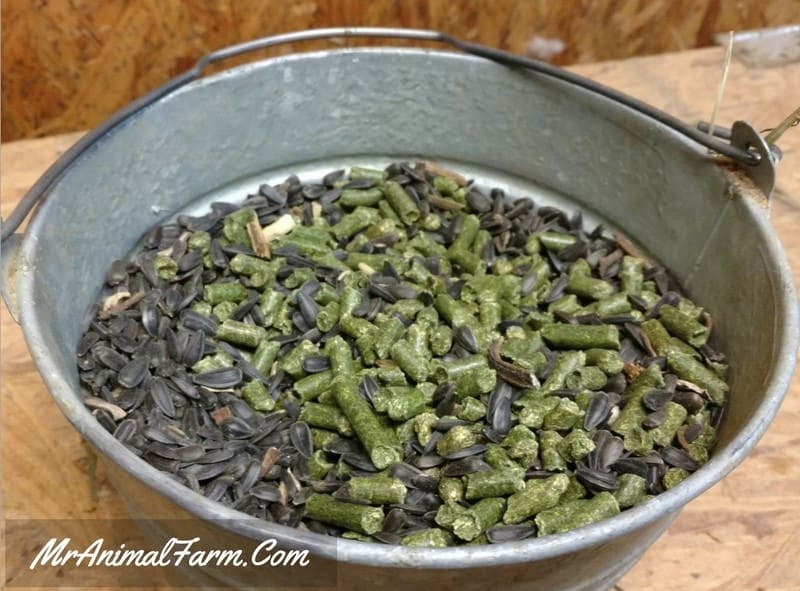
    Tips for increasing milk production: Alfalfa (either pellets, hay or both) is highly suggested for milking goats.  Alfalfa is highly nutritious having high protein and high calcium. Making all that milk takes a lot of calcium!

    Adding in other highly nutritious treats like beet pulp, high quality grain in addition to the alfalfa will help as well.

    mixture of alfalfa pellets and sunflower seeds

    4. Parasites or other health issues.

    As we have mentioned, producing milk is hard work.  If your goat has a high parasite load or other health issue, there's a chance you'll experience decreased milk production.

    It is recommended that you keep a check on parasites especially to be sure that your milking goats don't get an overload.  If they do, you will need to choose the best goat dewormer and get rid of the worms.

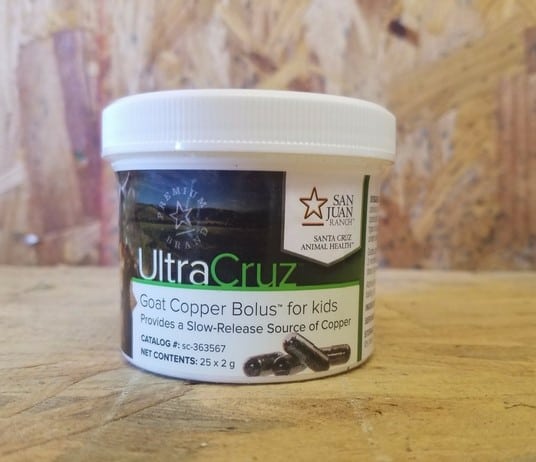
    copper supplement for parasite control

    Do note, that if you are drinking your goat milk, some dewormers have a withdrawl period where you will need to toss the milk.

    Additional tips for increasing milk production in goats

    In addition to the above, here are some additional tips to maximize the milk you get from your goats.

    • Increased Water - make sure that your goats are well hydrated.
    • High Quality Goats/Selective Breeding - make sure you are maintaining goats that are bred for high production over long lactations
    • Age - first fresheners will produce less overall and as goats get much older they may produce less also
    • Good quality Minerals - this increases their nutrition to ensure they have the nutrients required to produce milk
    • Consistent Milking - milk two to three times everyday and try to do it at the same time each day.

    Now that you know some of the causes of decreased milk production in milking goats, you can be sure to keep your girls in tip, top producing states! Drop us a comment below if you have any questions.

    If you need more help getting your goat breeding running smoothly, check out The Ultimate Goat Breeding Planner - checklists, record sheets, supply lists and more to keep your breeding season going so you can enjoy the baby goats without worry.

    Access The Ultimate Goat Breeding Planner Here

    How to Ship Live Chicks - A Step by Step Guide for Shipping Chicks

    By MrAnimal Farm

    How to Ship Live Chicks

    If you are hatching chicks, you may also be selling them too!  And, if you are selling chicks, you may be wondering how to get them to people who are far from where you are. And that means you need to know how to ship live chicks.

    How to Ship Chicks

    Well, as you probably know, shipping day old chicks is an option.  Without knowing how to ship live chicks it may seem really scary to stick them in a box and send them on their way.

    As long as you have proper chick shipping supplies and follow a few chick shipping guidelines, you (and your sweet chicks) should be good to go!

    Here is how to ship live chicks with our step-by-step guide

    ...

    Read More

    Reading Goat Pedigrees - How to Understand Your Goat's Pedigree

    By MrAnimal Farm

    Whether you are just looking at goats for sale or you already have registered goats, you may look at these goat pedigrees and think - What the heck do all those letter, numbers and symbols mean?  We sure did when we first started looking at goats.  Reading goat pedigrees can definitely be a little like reading a foreign language.  However, it is important to understand your goat's pedigree.  Afterall, you are paying more to get a goat with a pedigree, right?  Then you should make sure that it is a pedigree that you want.

    Being able to read a goat pedigree is an important part of making the right goat breeding decisions.  

    How to Read a Goat Pedigree:

    Ok, so you might see a pedigree that looks something like this:

    SG GCH Waterloo Pond RHP Nutmeg 3*M VEEE90 (this is the dam of our buck The Winter Solider).

    There are 4 parts to this title.  Of note, this pegree above is ADGA only.  AGS, another popular registry, has similar programs/designations with different ways to notate them.

    Top Designations in Goat Pedigrees

    Typically the first few letters will be designations or titles that the goat has achieved.  In this example, the SG and the GCH are designations.

    SG stands for Superior Genetics and indicates that she in in the top 15% of the breed for the PTI. (For more on Superior Genetics, check out the ADGA site here.)

    The GCH represents that she is a grand champion. (This would reflect as ARMC or MCH in AGS and is called master or permanent champion).  You could also see CH which represents a Champion.

    Names in Goat Pedigrees

    After any top designations in your goats pedigree, you will see the goats full, registered name.  The first part of the name will be the herd name (the farm that bred the goat).  In our example above, it is Waterloo Pond.  This will be followed by the goats name.  In this example, Nutmeg.

    Of note, you may see initials, like the RHP in our example.  Often times, these initials indicate a sire, dam or some other means of tracking the goats history.  These are not required, but some people choose to use them.  You may also see more elaborate goat names like one of our girls:  Lil Mtn Karamel Moonlight.  In these instances, most goats will also have a call or herd name that is shorter.  In this case, it is Kara.

    Milk Production in Goat Pedigrees

    The next piece you will often see are *M or *D.  These indicate that a goat has achieved an award for milk production (these can be either based on volume or milk components).  M is used in ADGA while D is used in AGS. In bucks, you will see *B or *S and also +B and +S - they earn these based on daughters or dam's performance.  In our original example above you will see 3*M.  The number before the * indicates that she is a third generation star earner.

    Conformation or Linear Appraisal Scores in Goat Pedigrees

    The last piece you will see tagged onto a goat pedigree is their conformation scores or classification.  In our example above, she has a Linear Appraisal Score (ADGA program) of VEEE90.  The V's and E's represent different structural categories she is rated on.  AGS also uses a similar program.  If a goat has been judged in the AGS program, you will likely see just a letter and number such as E90.

    Final Thoughts on Reading Goat Pedigrees

    Ok, whew!  So, now that you know all the letters, numbers and symbols, you should be able to better understand a goat's pedigree.  And of course, if you are looking at the whole pedigree including the goats dam, sire, dam's dam and so on, you will be able to see what traits trend in their ancestry.  This will hopefully allow you to make purchase decisions to help you get to the goals you are trying to achieve with your goats.

    How Much Feed Per Chicken - A Chicken Feeding Guide

    By MrAnimal Farm

    Chicken Feeding Guide

    Every chicken owner (or potential chicken owner) knows how super valuable it would be to have a chicken feeding guide. Whether you are just thinking about getting chickens or perhaps already have chickens, you may wonder how much feed per chicken you can expect them to eat.

    Chicken Feeding Guide

    Of course, how much feed your chickens will consume will depend on a few factors.  We will look at age/size as well as feed supplements as we assess how much feed per chicken you will need to provide.

    So, here a Chicken Feeding Guide to find out how much feed per chicken will be needed.

    First, let's talk about adult layers.  A generally accepted layer feed consumption per day is .25 or ¼ of a pound of chicken feed per day. This is assuming that you are feeding adult layers a regular dry chicken feed as their only source of feed.

    Next, let's talk about chicks from hatch to 8 weeks of age.  Of course, a little baby chick is not going to be feed as much as an adult chicken.  From our experience raising pullet growouts, each chick will eat about 5 - 6 pounds of feed from day one to 8 weeks of age.  The first few weeks, they don't consume much feed.  But at week 4 or so, they can really start to plow through their feed.

    A few factors to take into account when looking at how much feed per chicken to provide:

    1. As discussed above, age is an important factor.  Babies and young chicks won't consume as much feed.

    Chicken Feeding Guide


    2. Size of birds.  If you are feeding bantam (small sized) breeds like Silkies, they will obviously eat less than heavy breeds such as Orpingtons.

    Chicken Feeding GuideChicken Feeding Guide

    3. Feed Supplements.  If you are feeding your chickens in addition to their regular feed, their feed consumption will decrease.

    Chicken Feeding Guide


    So, for example, if they are getting lots of garden scraps, scratch, mealworms or are free-ranging they will be getting nutrients from additional sources and will not need as much feed per day.

    4. Feeding set-up.  If you are using no-waste feeders or fermenting feed, your chickens will be getting more of the good stuff and wasting less.  This will mean less feed per day per chicken.

    Chicken Feeding Guide

    Feeding chickens isn't always pretty.

    5. Health and Environment.  If your chickens are sick at all, if they are molting or if it is very hot or cold (or any type of extreme environment) then they need more feed in order to combat the stress on their bodies.

    Any questions on how much feed to provide your chickens?  Drop them in the comments below!

    Chicken Feeding Guide


    Choosing Hay - Tips to Choose High Quality Hay

    By MrAnimal Farm

    Choosing Hay – Tips to Choose High Quality Hay Instagram

    Good quality hay is a main supplies for goats.  Figuring out what to look for when choosing hay can be difficult at first.  When we first looked for hay for our goats, we didn't know anything about hay.

    baby goat sleeping on top of hay bale. Text reads, "Choosing Hay. Tips to choose high quality hay"

    You've probably heard goats can eat anything. But that's not necessarily true. You need to know exactly what goats can eat so you don't make them sick. Choosing a quality hay is a key component.

    It's easy to assume that hay is just hay.  But, in reality hay comes in many different qualities.  It is especially important particularly if you are feeding goats or horses (which can be sensitive to certain things) to know how to choose a high quality hay.

    Here are a few tips to lead you in choosing hay:

    1. Dry

    You want to make sure that the hay you purchase has been kept dry.  Hay that has not been kept protected from the elements may very well have gotten wet and rained on.  Wet hay will mold.  Mold can be very dangerous for goats and other animals.

    baby goat standing on bale of hay

    2. Dust-free

    Of course, there will be a small amount of dust possible in your hay.  But, overall,  when choosing hay you want the hay to be as dust-free as possible.  Dust can actually be mold.  Even if it is not mold, dust is still not good for the animals.  Many animals can have allergy problems from dusty hay.

    3. Extra Junk

    Make sure that the hay you choose does not have excess debris, foreign plants or other stuff in it that shouldn't be there.  You want to be sure that no poisonous plants are in the hay, no damaging insects/bugs.  And also, if there is a bunch of junk in the hay, your animals are not going to eat those parts and it will lead to a lot of waste.

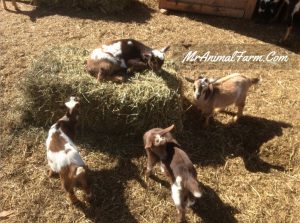
    baby goats nibbling on bale of hay

    4. Not brittle

    When choosing hay you want to be sure that the hay will be easy to eat and digest.  If the hay breaks easily, then your animals will have more difficulty eating it and it will not be as appealing to them.

    goats around hay feeder

    Also, if the hay is all stems and not many leaves they will not like it as much and will waste a lot.  Therefore, you want to get hay that is green, soft and a mix of leaves and stems.

    5. Hay types

    There are a ton of different types of hay you can choose from. The variety can be a bit overwhelming. The best type of hay for goats, especially if they are milk goats, is alfalfa hay. But any grass hay will do, such as Timothy hay or Orchard Grass hay.

    You will want to stay away from Fescue hay. It can cause issues with your pregnant goats.

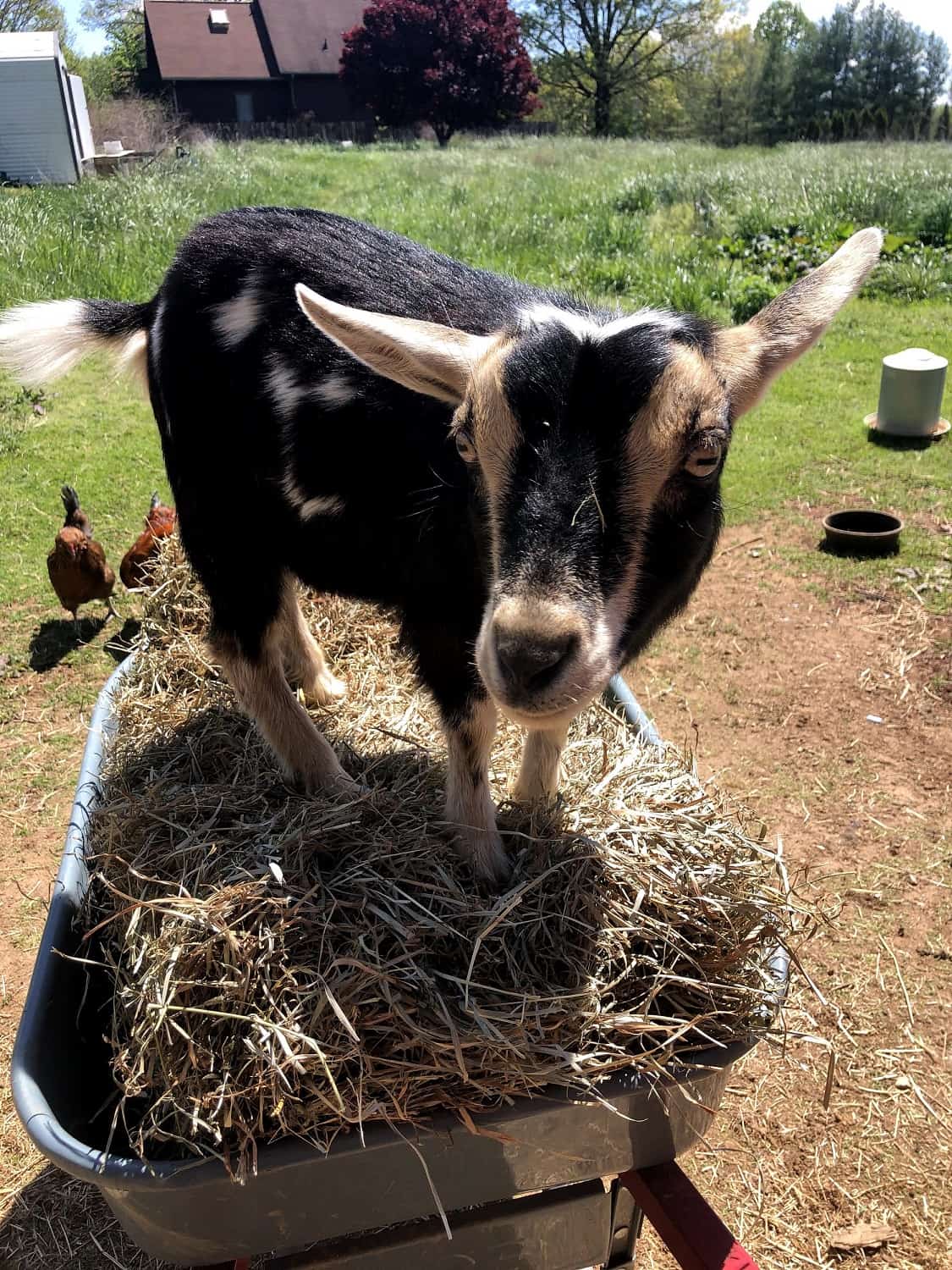
    goat standing on hay bale in wheelbarrow

    Once you have your high quality hay, you will also want to make sure you have a nice hay feeder to put it in for your animals so that they can easily eat it!

    If you have difficulty finding hay or the amount of hay you need, you can also try supplementing with Chaffhaye.

    For more information on daily care for goats check out "Getting Started with Goats" the eBook or "Getting Started Raising Goats"  the eCourse.

    pinterest image of baby goat sleeping on hay bale. text reads, "how you can choose the right hay for all of your goats."

    [pt_view id="89114c7qgm"]
    Silkie Chickens - 5 Reasons You Need a Few

    By MrAnimal Farm

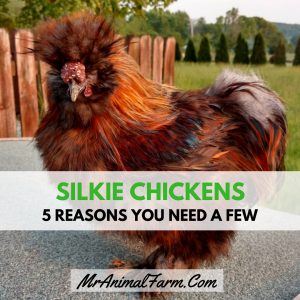
    Silkie Chickens

    Silkie Chickens are a favorite around here.  If you are looking to add a new breed to your flock and aren't sure which breed to get, Silkies are definitely a breed to consider.  We have almost as many silkies as we do egg layers because we love our silkies so much!

    If you want to know the full top 5 breeds for your backyard flock check out this ebook!

    Silkie Chickens

    Reasons YOU need a few Silkie Chickens:

    ...

    Read More

    Chaffhaye Benefits - Hay Replacement or Supplement for Goats

    By MrAnimal Farm

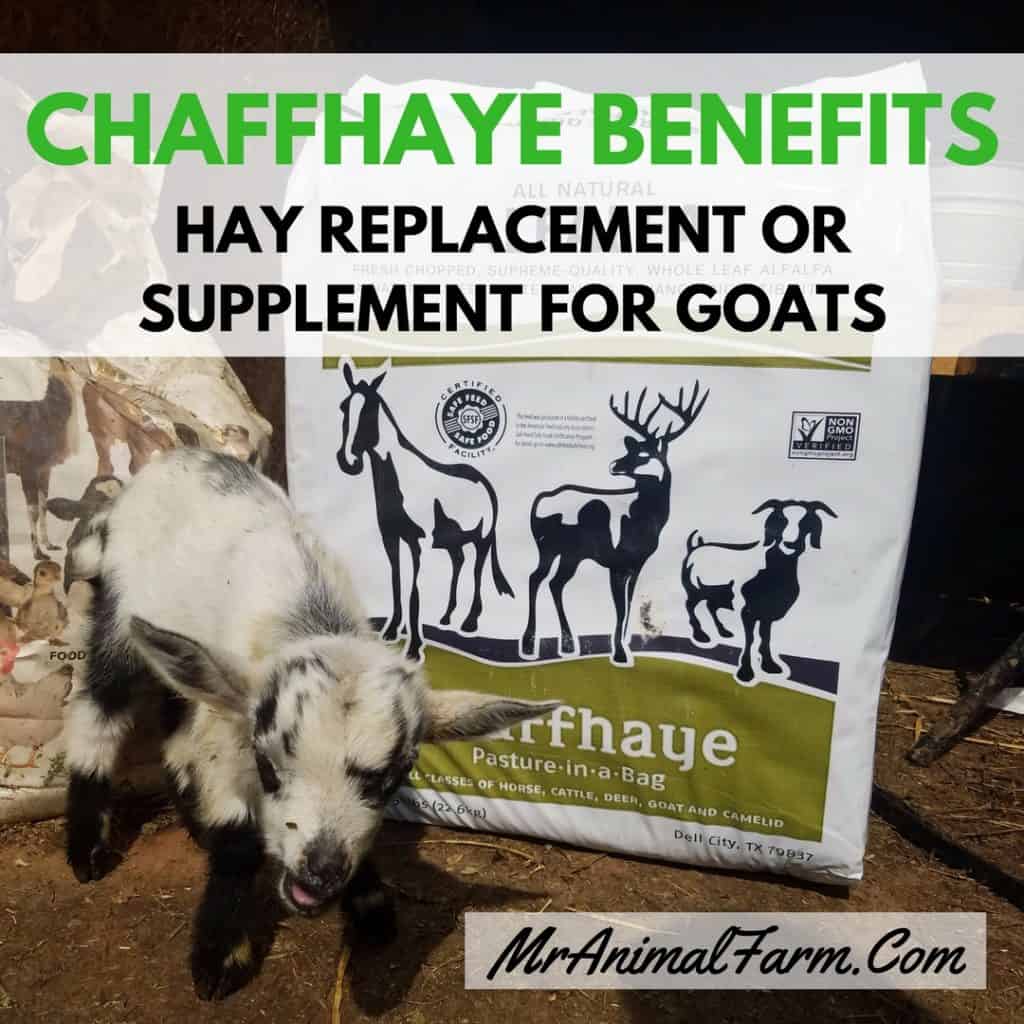
    Chaffhaye benefits

    If you can't find hay, your hay quality is lacking or the price of your hay is too high Chaffhaye might be a good answer for you! Chaffhaye benefits far outweigh the negatives of trying it out.

    Chaffhaye benefits feature image with baby goat in front of chaffhaye bag

    When you have goats, there are a lot of misconceptions concerning what goats do eat. They will of course need you to choose hay in addition to other goat supplies.  The thing about hay is that it can be difficult to find.  Finding a high quality hay can be especially hard.  Also, depending on your area, high quality hay can become very cost prohibitive.

    ...

    Read More

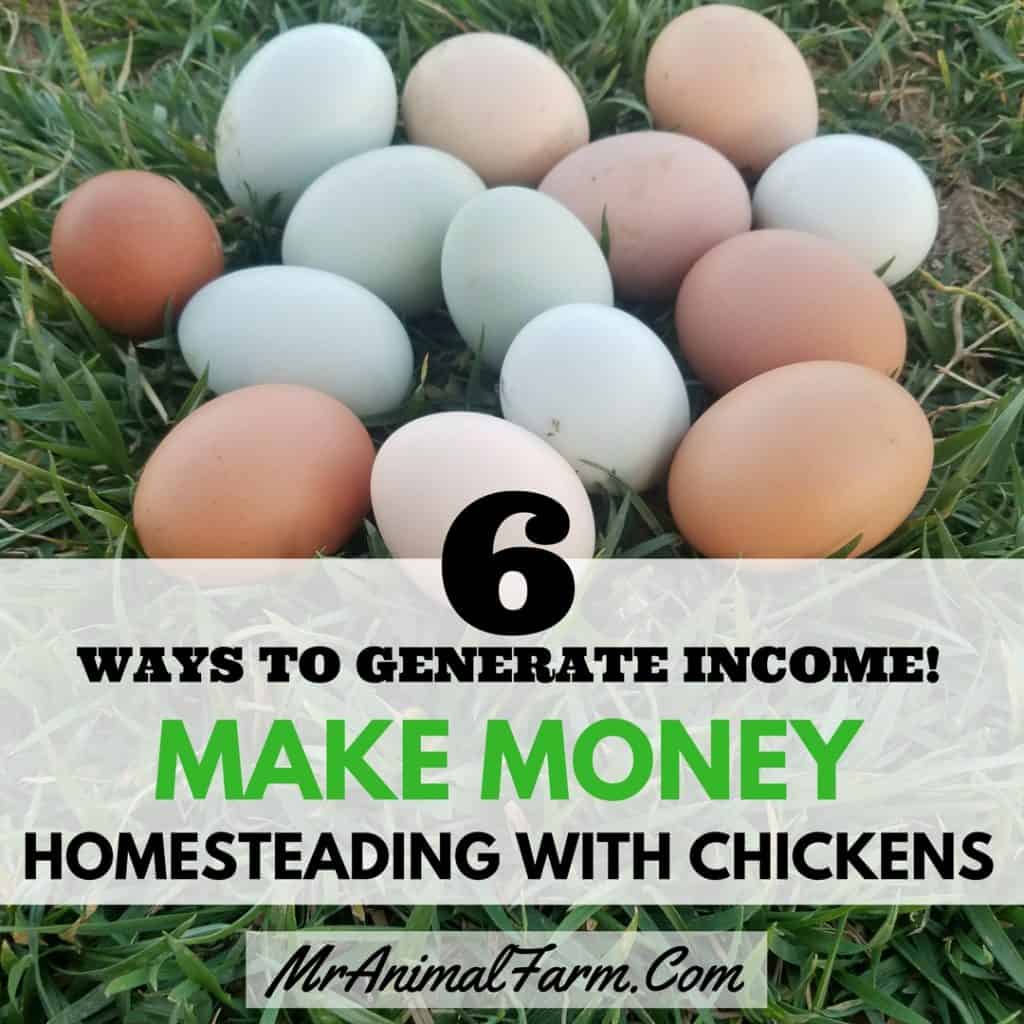
    Make Money with Chickens - 6 Ways to Generate Income

    By MrAnimal Farm

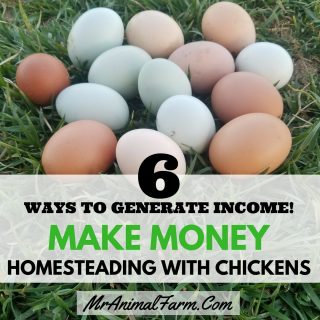
    make money with chickens

    Wondering if you can make money homesteading with chickens?  The answer is YES!  We make about an average of $800/mo homesteading with chickens.

    make money with chickens

    Our homestead goals are to not only be self-sufficient, but to also make money homesteading so that all of our time can be put into our homestead (and other things we enjoy) and not in full-time jobs working for other people.

    Setting up a profitable homestead takes a lot of work - both in planning and in execution.  But it is possible.

    One important thing we have learned in our effort to have a profitable homestead is that each expense should generate MULTIPLE streams of revenue.  Learning how to make money homesteading with chickens is a wonderful way to make a profitable homestead.  This is due to the fact that you can generate multiple streams of revenue with them.

    ...

    Read More

    Top Reasons to Keep Backyard Chickens

    By MrAnimal Farm

    Top Reasons to Keep Backyard Chickens

    Many people keep backyard chickens.  In fact, many cities now allow a certain number of chickens within city limits even!

    Top Reasons to Keep Backyard Chickens

    So, if you have not jumped on the chicken keeping  bandwagon yet, you may be asking why?  Keeping backyard chickens has many advantages (you can even make money with chickens)....

    Read More

    What Are Freezer Meals? - Benefits of Make Ahead Freezer Meals

    By MrAnimal Farm

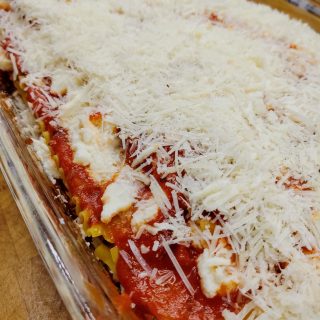
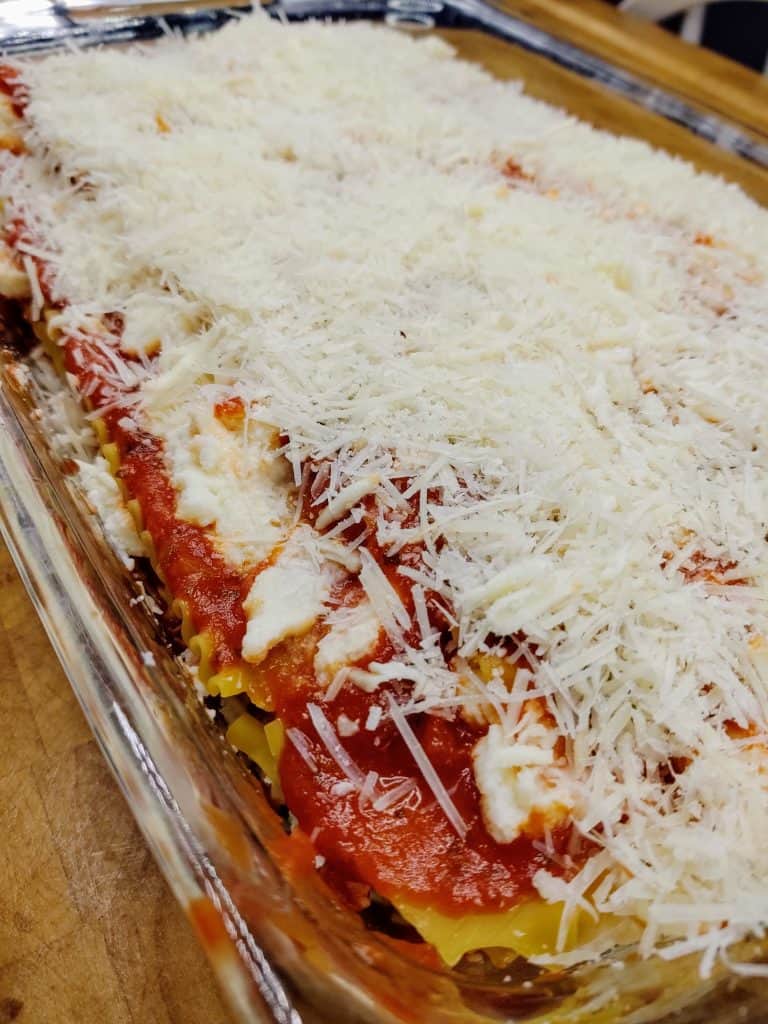
    lasagna prior to freezing

    Do you ever do something and think, "wow, how cool/smart/awesome am I that I thought this up"?  This was us, about 10 years ago when we first thought of freezer meals.

    lasagna before becoming a freezer meal

    We made this large crockpot meal, had some leftover broth and decided to make soup.  Well, since the first meal we had made was plenty for a few days, we decided to toss that soup into a freezer bag and freeze it for later.

    Then we thought, well, how efficient of us?!  Two meals, both cheap and hardly any time spent.  Plus now we have a healthy, cheap meal we can heat up later.  GENIUS!  (Ok, so, turns out we aren't the ONLY ones with this great idea (haha!)

    So, what exactly are freezer meals?

    Well, freezer meals are pretty much exactly what they sound like.  They are are meals that you pre-make and then stick in the freezer for easy (and fast!) reheating at a later date.  

    Yes, they are as awesome as they sound!  A full meal all ready to go - without paying top dollar for junky store "freezer meals" (ya know, those not so awesome tv dinners?).

    How do we make them?

    You can put freezer meals into freezer bags - I splurge and get these Freezer Bags with Zippers.  I have tried the other bags that aren't "freezer bags" and I have tried freezer bags without the zippers.  Sometimes they work and sometimes they don't.  Quite frankly, the additional money is worth it to me to know that the bags are going to keep my food fresh until I am ready to eat it.  

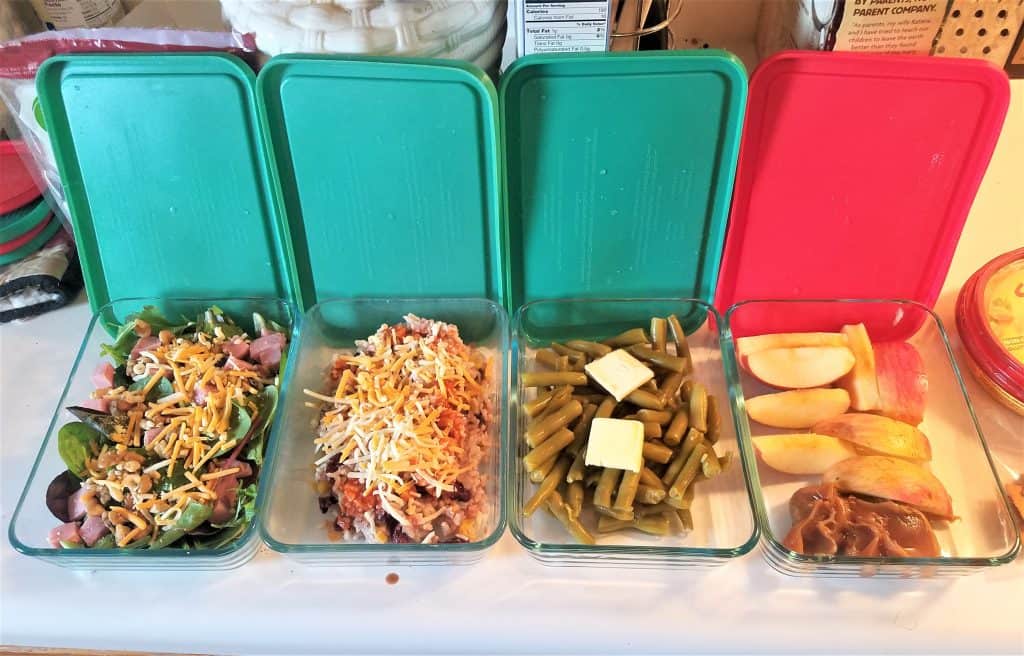
    If you want to skip plastic baggies and instead store in containers that are re-useable, that is also totally do-able.  We love these Pyrex dishes for storing our meals.

    pyrex dishes with salad, burrito bowl, green beans, and apple slices with peanut butter

    You can take pretty much any meal you've made and stick it in the freezer for later.  Casseroles, quiche, soups, roasts the list could go on and on.

    The benefits of freezer meals are pretty darn awesome!

    Freezer meals are pretty super duper!  They can be made super cheap.  Of course you could get some expensive steak and cook it up and freeze it and that wouldn't be so cheap.  But, in general, they can be made very cheaply.  

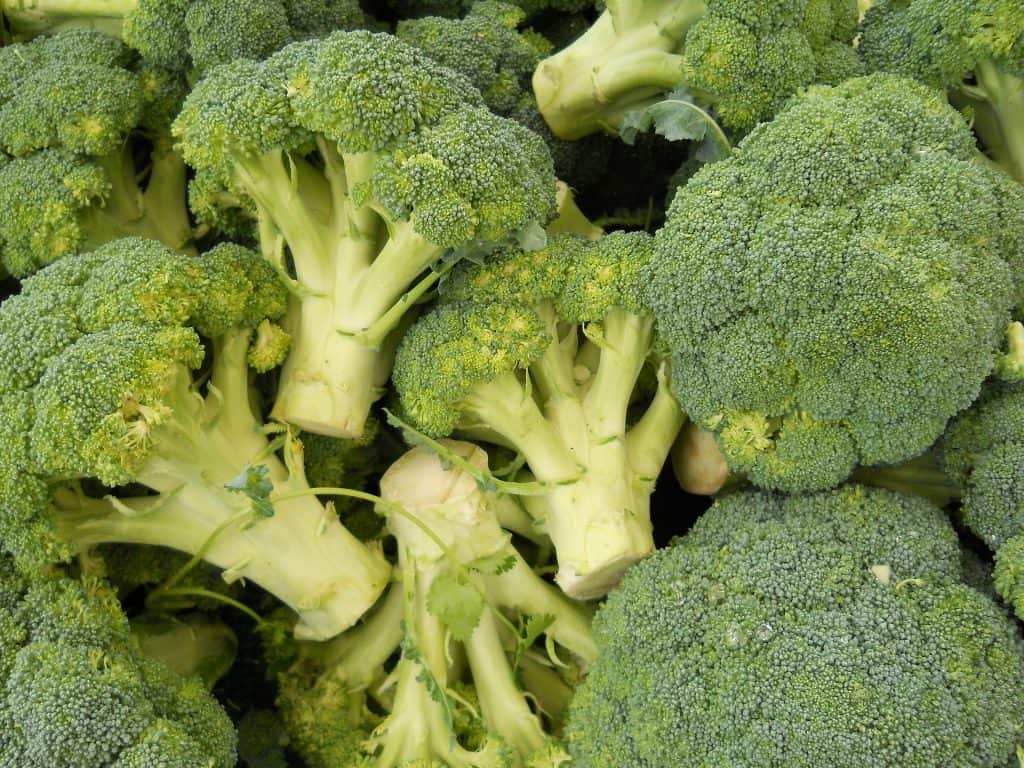
    Think about this, you go to the store and they have fresh broccoli on sale because it's in season and it's DIRT cheap.  Well, normally, you'd buy whatever you could use before it goes bad right?  Not if you are making freezer meals!

    large mound of broccoli

    BUY ALL THE BROCCOLI!

    Ok, ok maybe not buy ALL the broccoli.  But do buy a lot of it.  Cook it up and make freezer meals with it.  This way you can buy perishable things on sale in bulk.  Also, if you LOVE something seasonal, buy a bunch and don't pay outrageous prices when it is not in season.

    Another benefit of freezer meals is time.  They save SO MUCH TIME!  Think about this, if you are cooking a casserole it doesn't really take THAT much extra time to make two.  So, you can make two and freeze one for later.  Basically, you can make them in bulk which will save you so much time.

    Last, but not least, another benefit is convenience.  Now, let's be honest, how many times have we run and gotten takeout because it was easier or faster and we were short on time?  Takeout (generally) is NOT cheap and isn't that healthy.  But, if you are short on time and you have freezer meals, just take them out heat them up and you're ready to go!

    Now that you are convinced, which will you try first?

    If you're ready to get started with freezer meals here are a few that we love

    Freezing Oatmeal

    Breakfast Sandwiches

    homemade egg, cheese, english muffin freezer meal

    freezing Lasagna

    Freezing Mashed Potatoes & freezing Sweet Potatoes

    Hash Brown Casserole

    5 Goat Medical Supplies - Always Keep These on Hand!

    By MrAnimal Farm

    goat medical supplies

    The first year we had goats, we had them home for about two weeks and our baby wether started having scours (diahrrea)....on the weekend of course!  He was such a tiny baby, we knew he would need help fast, but we didnt know what to do -- it was our FIRST sick goat.  And we didn't have ANY goat medical supplies on hand.

    We called our vet (who thankfully called us right back).  She gave us things we could do to help him right away, but we didn't have ANY of the items on hand.

    goat medical supplies
    ...

    Read More

    4 (more) Winter Farm Activities to Try

    By MrAnimal Farm

    4 (more) Winter Farm Activities to Try

    The other night, we had gotten in from all of the evening chores, eaten dinner and cleaned up and I was SO sure it was 9pm....but, really the time was 6:30pm!  That's not to say that there isn't a lot to do this time of year, but things do gear down some - the garden is not active, there are no baby goats yet, hatching season is over.

    We have talked before about 4 Winter Farm Activities You Should Consider, but every year when winter hits, it really is shocking how things seem to just SLLLLOOOW down with the shorter, colder days.

    4 (more) Winter Farm Activities to Try
    ...

    Read More

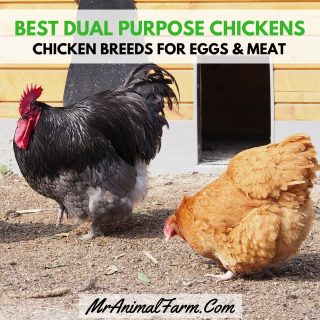
    Best Dual Purpose Chicken Breeds For Eggs & Meat

    By MrAnimal Farm

    Best Dual Purpose Chicken Breeds - Chicken Breeds for Eggs and Meat

    If you are looking for the best dual purpose chicken breeds, look no further!  Chickens can be used just for eggs or just for meat.  However, there are several dual purpose chickens that can be used for eggs AND meat.

    Want to know about more than just dual purpose chicken breeds?  Check out this guide to chicken breeds.

    You can also take a look at bantam breeds and specific chicken breeds like:  Silkie Chickens and Easter Egger Chickens.

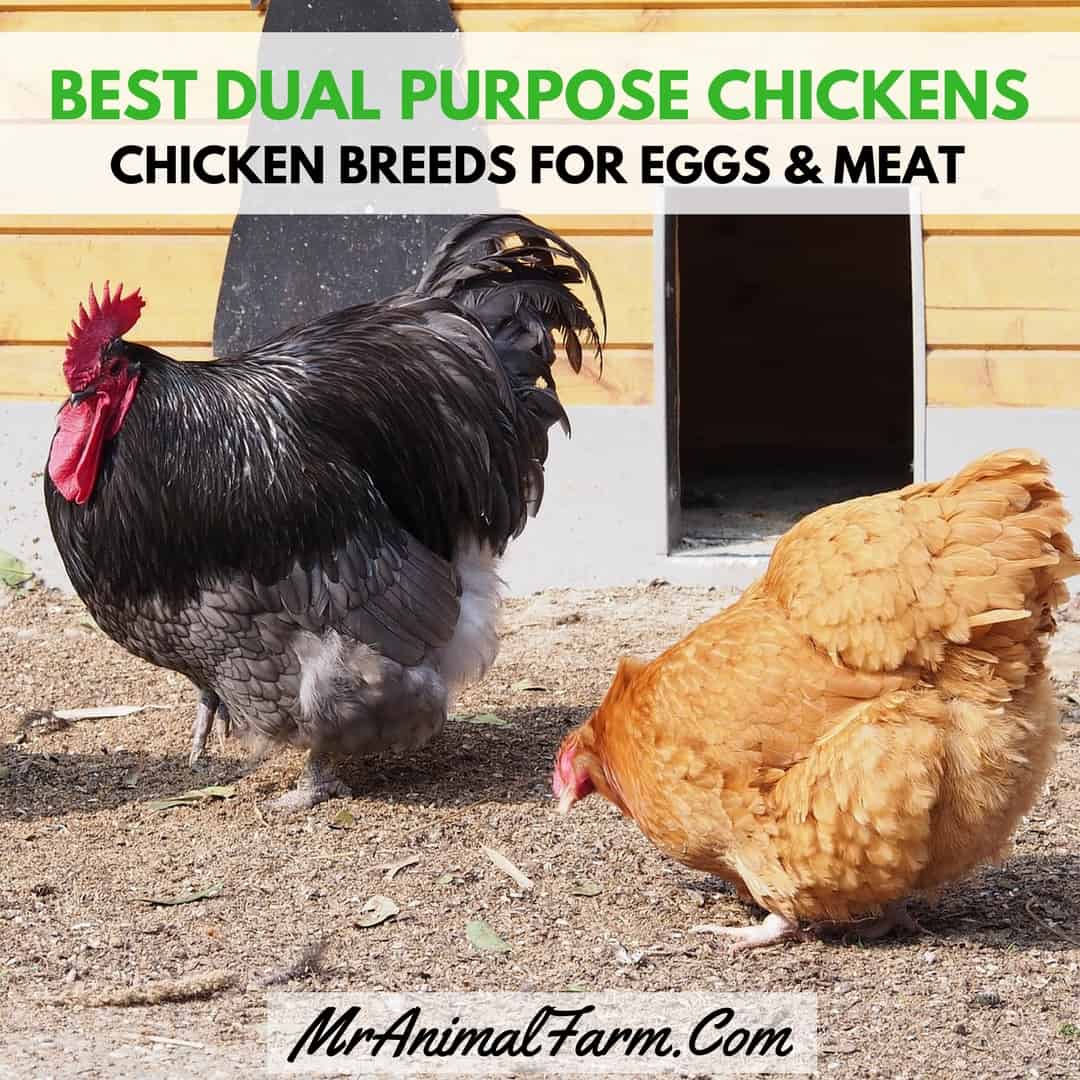
    Square featured image with a rooster and hen in front of a barn or coop. Text reads, "Best Dual Purpose Chicken Breeds. Chicken breeds for eggs & meat"

    What is a dual purpose chicken?

    A dual purpose chicken is a chicken breed that is used for both egg production and as a meat source. Generally, this means they will lay between 150 to 200 eggs per year (give or take) and will be heavier than your average chicken. Some breeds are naturally good layers and large while many other dual purpose chicken breeds are specifically bred to emphasize one or both of those features.

    Why Should you start raising dual purpose chicken breeds in your flock?

    Keeping a dual purpose breed of chicken or two can allow you to raise them through their most productive egg laying years and then cull them for meat birds when their egg production begins to decrease. Having your own meat chickens a very effective way to cut your personal grocery bill and know exactly from where your food has been sourced.

    You can also ensure that the meat you are eating is coming from chickens that were humanely raised and culled.

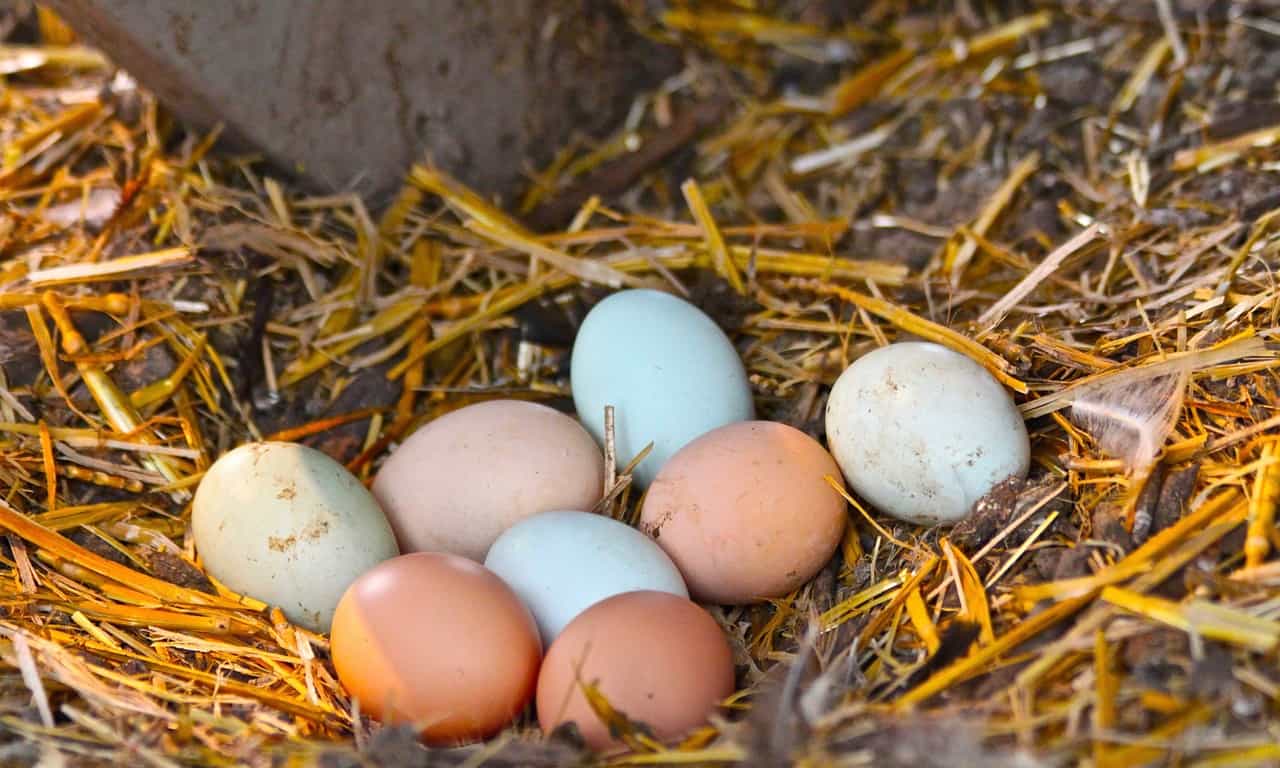
    nest of eggs

    We have you covered if you are just looking for the best breeds for your backyard flock too!

    So, what are the best dual purpose chicken breeds?

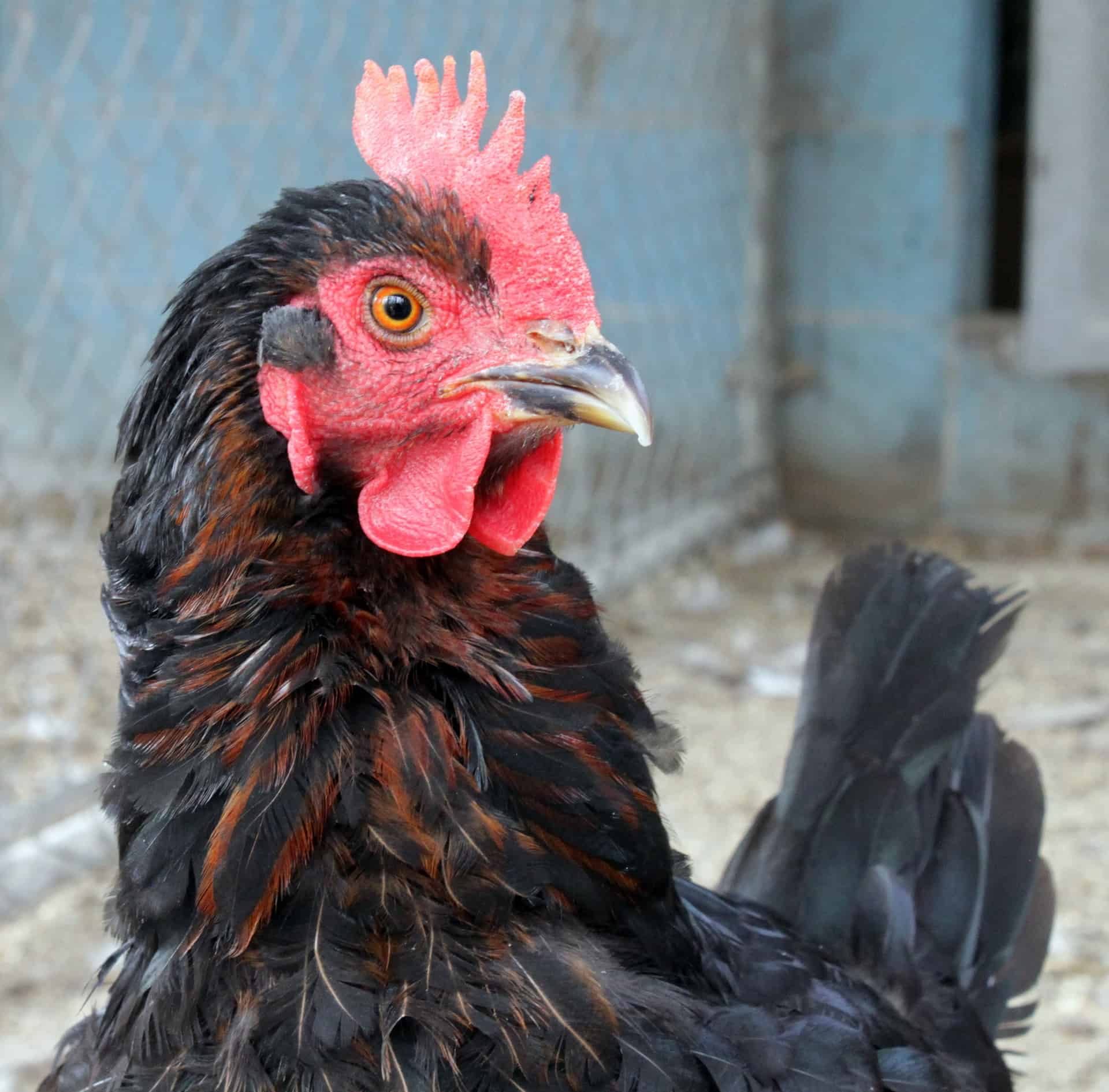
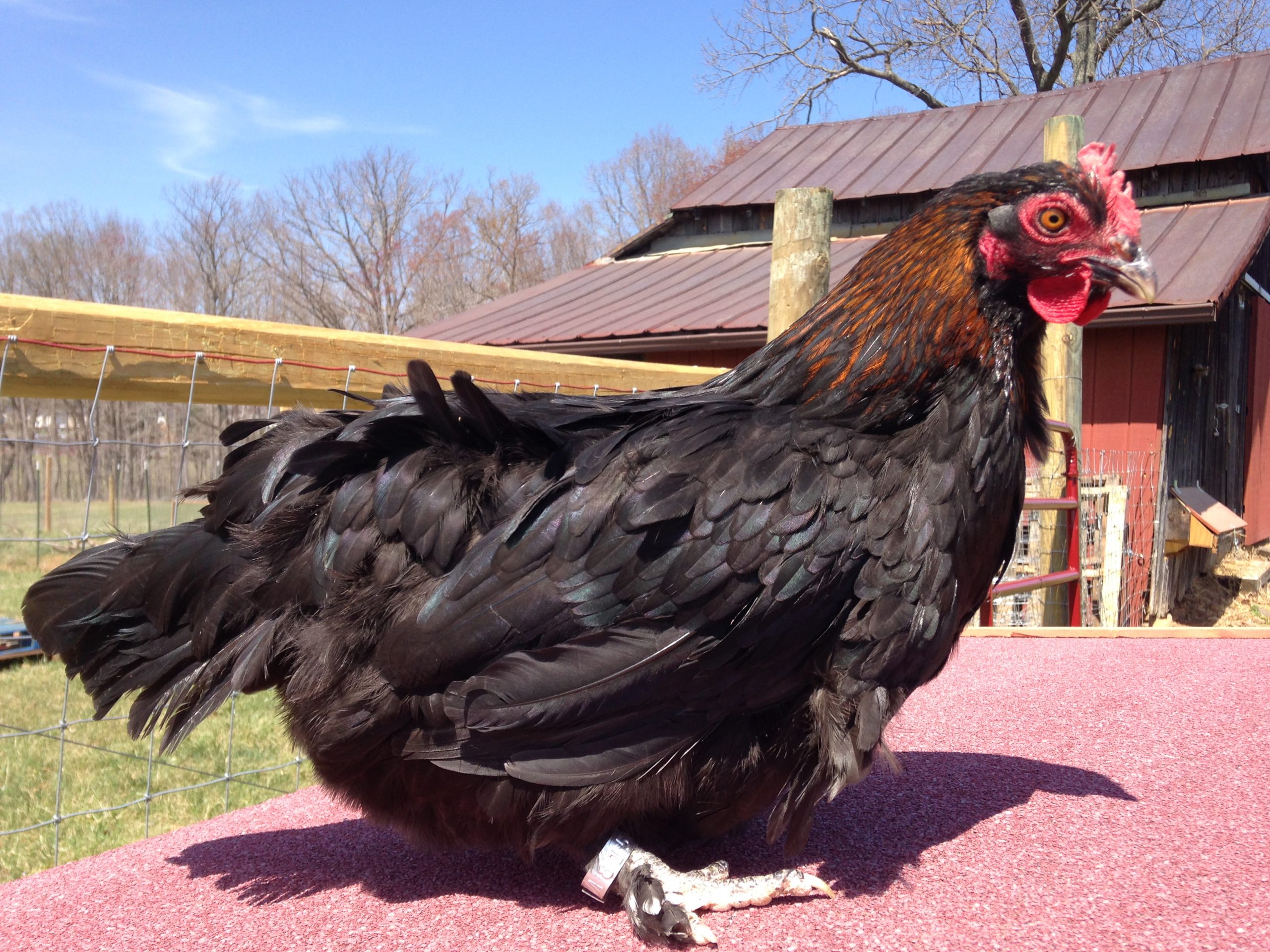
    1. Black Australorp

    These are one of the best dual purpose breeds of chicken.  Black Australorp's are fantastic egg layers.

    They actually hold the record for laying the most eggs in a year.

    Black Australorp closeup

    They are also a heavy breed, meaning that they will provide plenty of meat.

    If you want a little more variety, you can also find White and Blue Australorp.

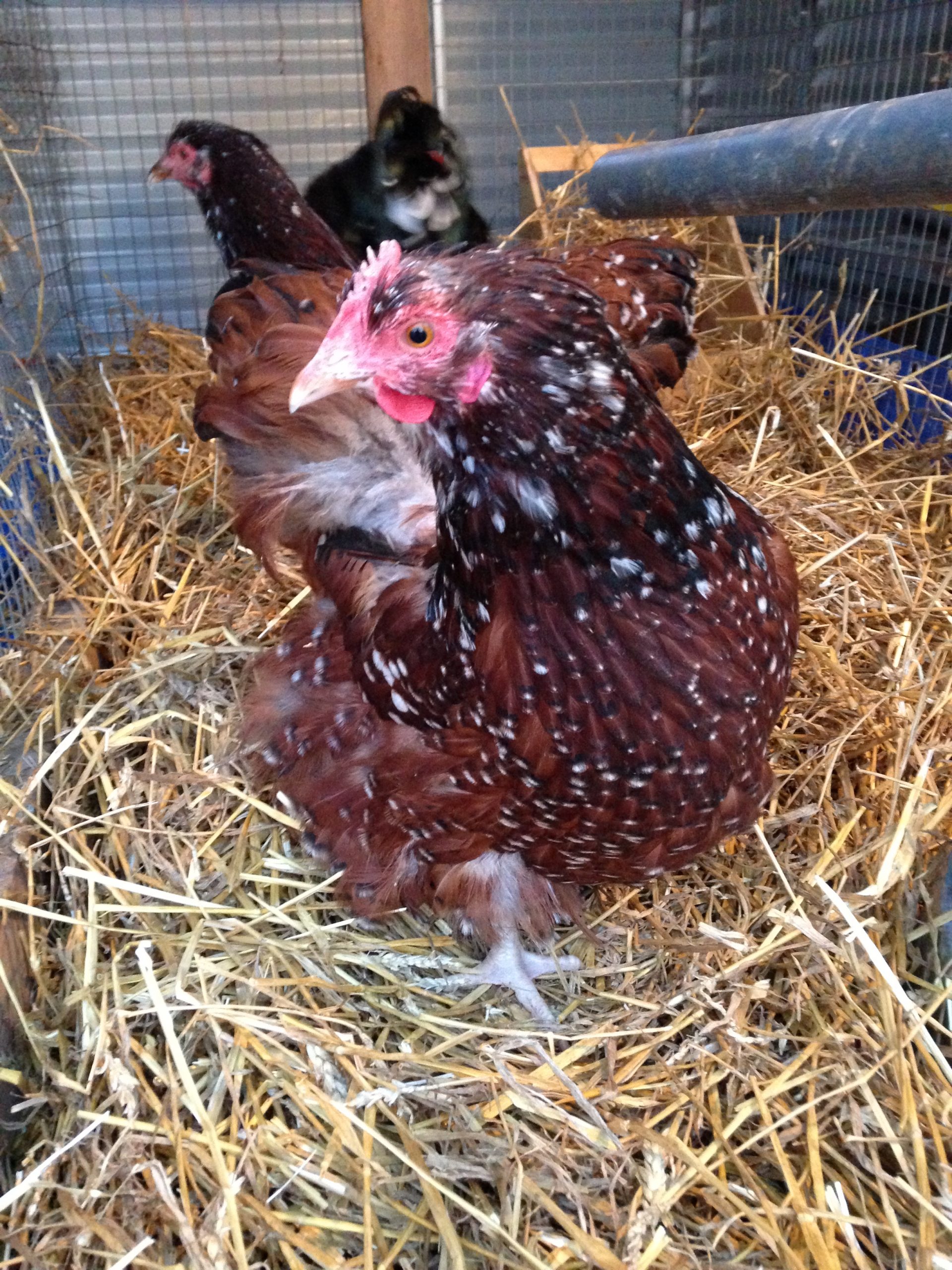
    2. Speckled Sussex & Wyandottes

    Speckled Sussex & Wyandottes are tied on this list of dual purpose breeds.  Sussex and Wyandottes are similar breeds in size and egg laying ability.

    They both are decent layers ( 3 - 4 eggs a week) of large eggs.

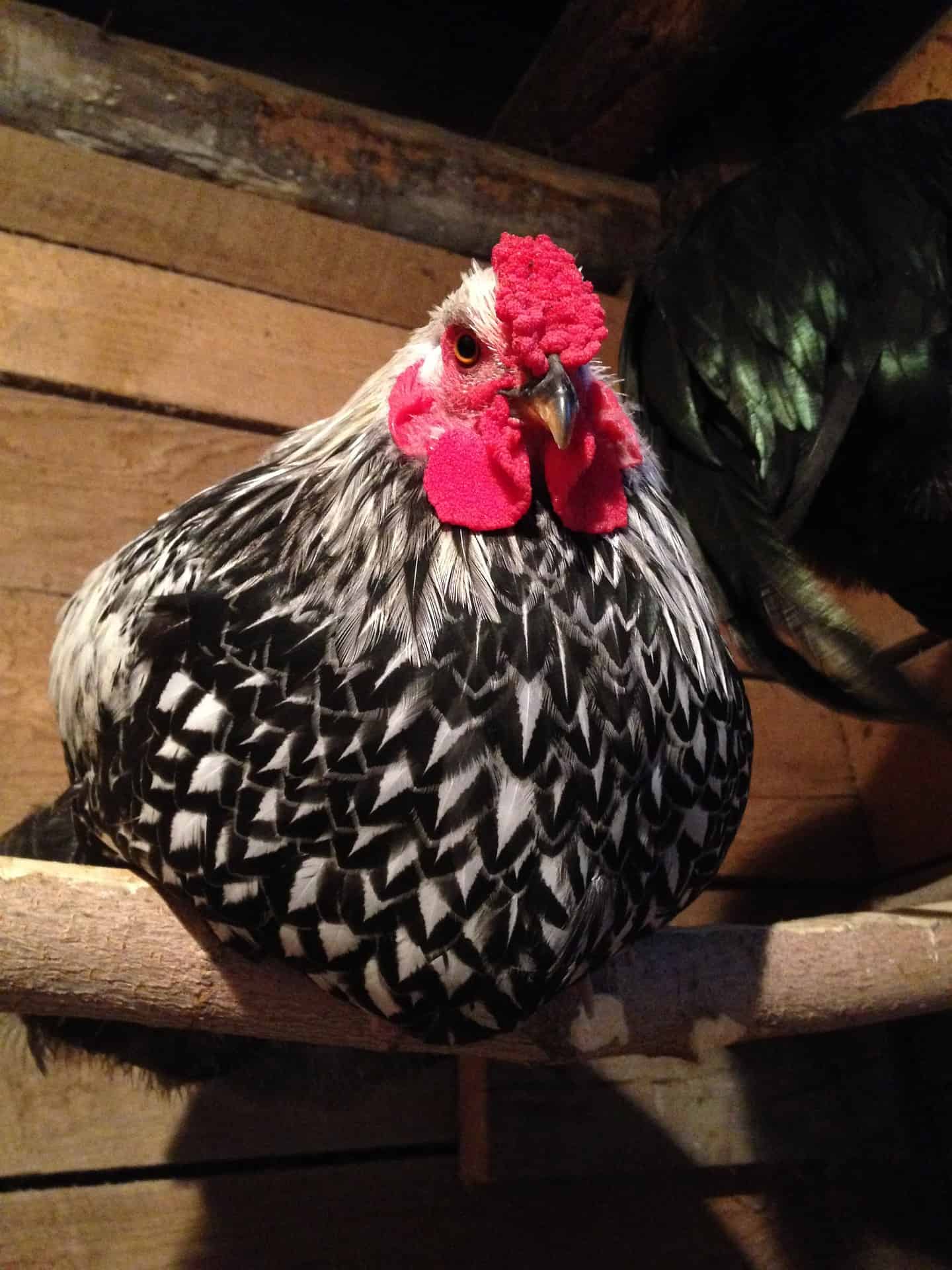
    Wyandotte roosting

    Wyandottes, similar to Orpingtons (below) come in a wide variety of really fun colors, such as black, blue, buff, Columbian, golden laced, partridge, silver laced (pictured above), and silver pencilled.

    3. Orpington

    This dual purpose chicken breed is the heaviest of all on the list.  These birds get huge.

    They are also good egg layers of medium large eggs.  As a bonus, they come in so many fun and exciting colors.

    Jubilee Orpington looking at camera

    Orpingtons are our the ones we think are the best dual purpose chicken on this list.  This is because of their size, egg laying ability, colors and calm personalities.

    Orpingtons, like the Wyandottes mentioned above, come in several different colors. The officially recognized colors are Buff, Blue, White, and Black. However, many breeders have experimented and come up with many other colors and feather patterns. For example, the hen pictured above is a Jubilee Orpington

    4. Rhode Island Red

    A list of dual purpose breeds would not be complete without mentioning Rhode Island Reds.

    The Rhode Island Red is not one of the largest chicken breeds that are on this list, however they are still large breed meat birds.

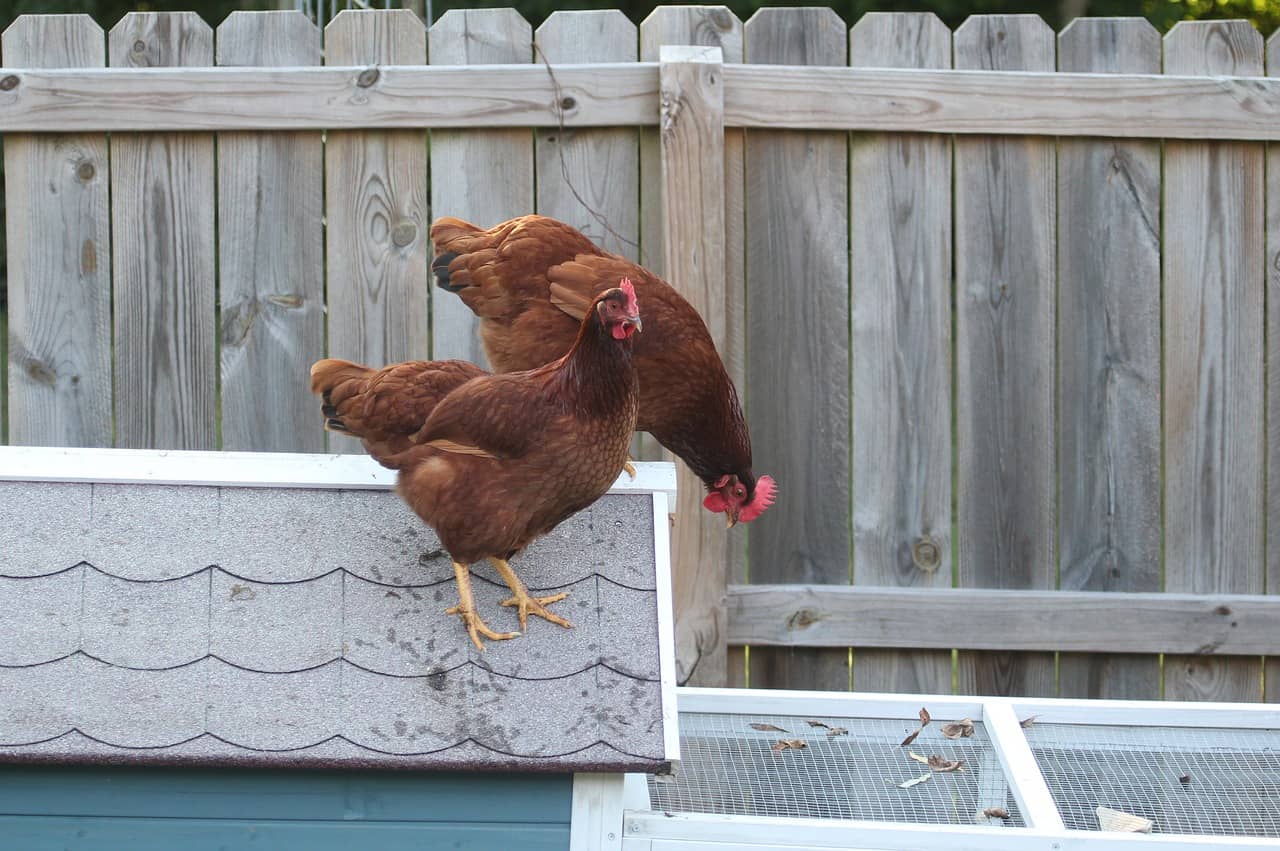
    2 Rhode Island Reds on top of their coop

    They are also great egg layers that lay large brown eggs.  These are probably one of the larger, more prolific egg layers on this list.

    Rhode Island Reds are also decent foragers, so their feed to production ratio is better than some of the other dual purpose chickens on this list.  This means that you feed them less for them to produce more (meat and/or eggs).

    5. Barbezieux Chickens

    This unique breed is originally from France. They lay on average around 160 eggs per year, but can range all the way up to 200 eggs per year.

    In addition to being good layers of Large white eggs, they are also a hefty breed that is well known for their meat. They typically weigh in from 8 - 10 lbs. With the smaller end being hens and the larger end being roosters.

    They are most well known for the significant amount of gamey flavored meat that they produce when butchered.

    As you can see, each of these 5 dual purpose chicken breeds will provide plenty of eggs and also plenty of meat.

    Which one (or ones) of these dual purpose chicken breeds are best for your flock?

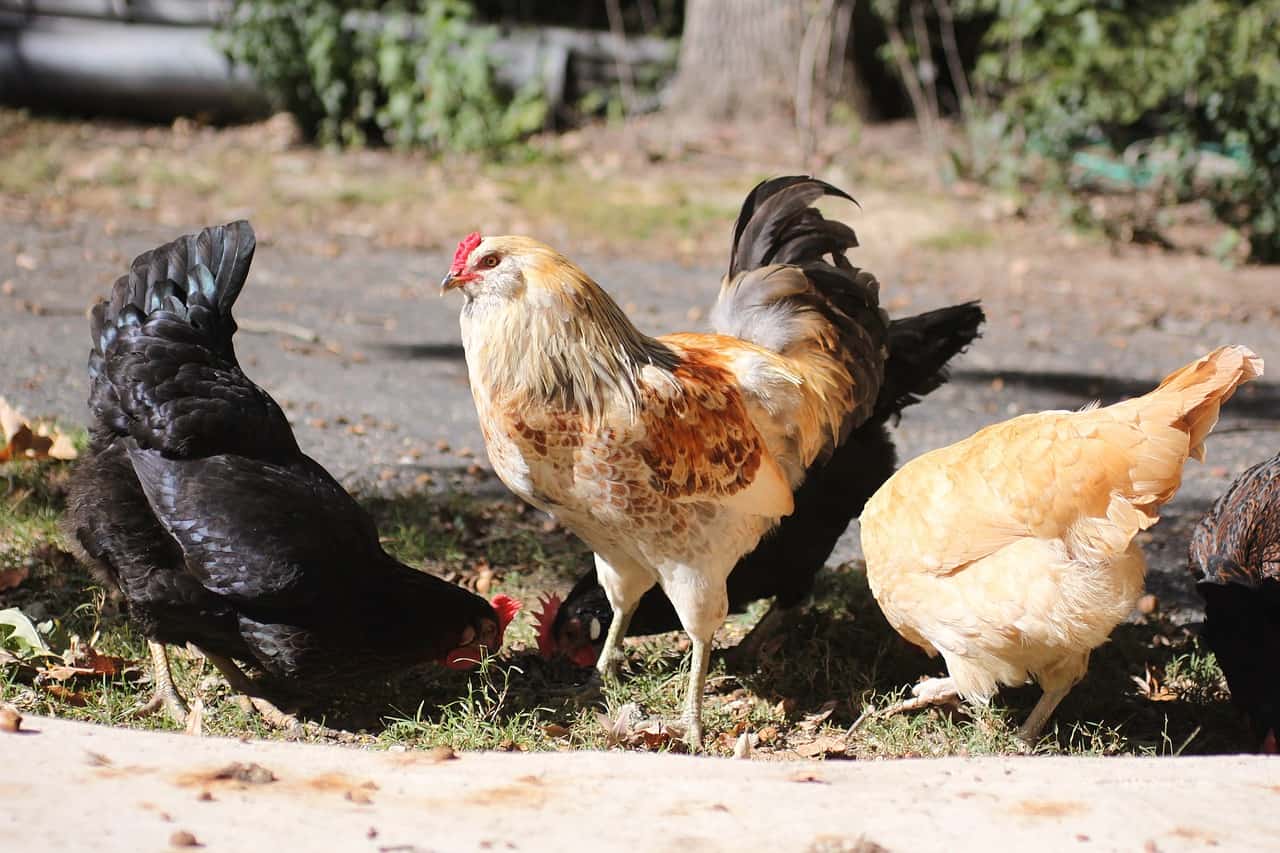
    a rooster protecting 3 hens while they eat

    They all have wonderful personalities as well as all of these breeds tend to be friendly.

    Which is your favorite on this list of dual purpose chicken breeds?  Still not sure what kind of chickens you want?  Check out How to Get Started Raising Chickens for help!

    pinterest image. top image: rooster and 3 hens free ranging. bottom image: closeup of chicken roosting. middle box text reads, "4 best dual purpose chickens your flock needs"

    More Chicken Raising Posts To Read:

    [pt_view id="3d0b212jvx"]
    DIY Goat Toys: Cheap Toys to Keep Your Goats Busy

    By MrAnimal Farm

    Goat Toys

    The other day I looked out my kitchen window and saw goats....outside of their fence just strolling around.  Yikes!  It turns out that bored goats are sneaky goats.  Goat toys can be a fantastic way to keep your herd busy and entertained during the day.

    Goats can be very inquisitive and can get into trouble climbing fences and doing other naughty things especially if they get bored.  So, just as you gather your goat supplies, build a goat pen, and make sure you know how to buy goats, so that you get the perfect ones, you will want to make sure you have some fun toys that goats enjoy playing with.

    If you don't have goat toys and all of your other goat supplies gathered yet, hop on over to our Getting Started with Goats eCourse and get yourself prepared!

    Once you have your everyday goat preparations ready, you may also want to think about what toys for goats you should get.

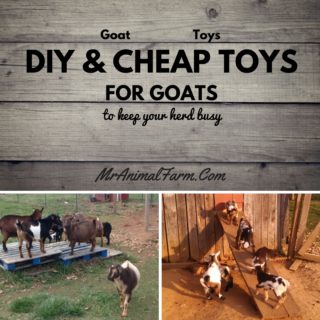
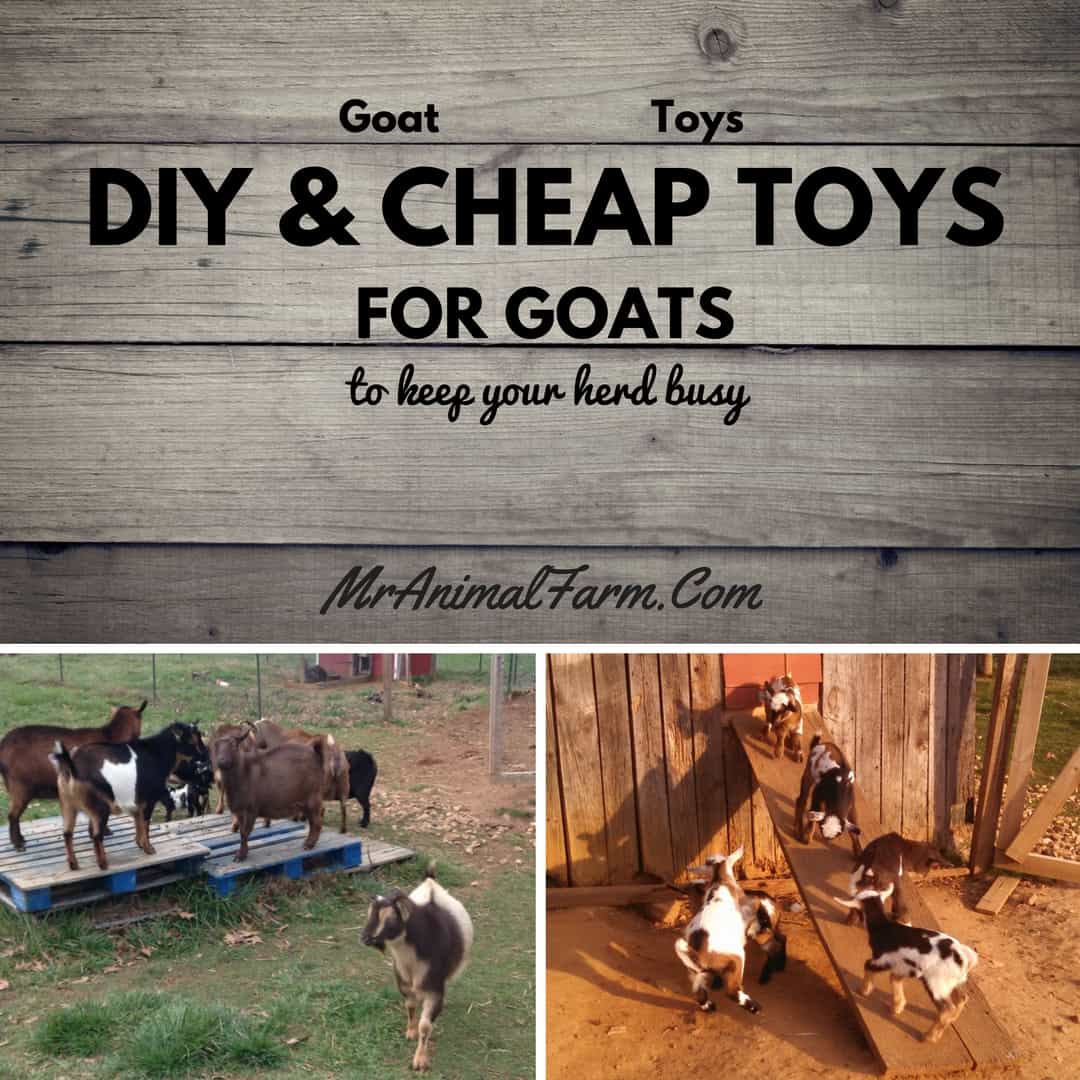
    square feature image top box text reads, "Goat Toys. DIY & cheap toys for goats. to keep your herd busy." bottom left image: herd of goats standing on a stack of pallets. bottom right image: baby goats playing on chicken coop ramp.

    It is probably no secret that goats love to climb.  So, really goat toy ideas that enable them to climb make perfect goat toys.

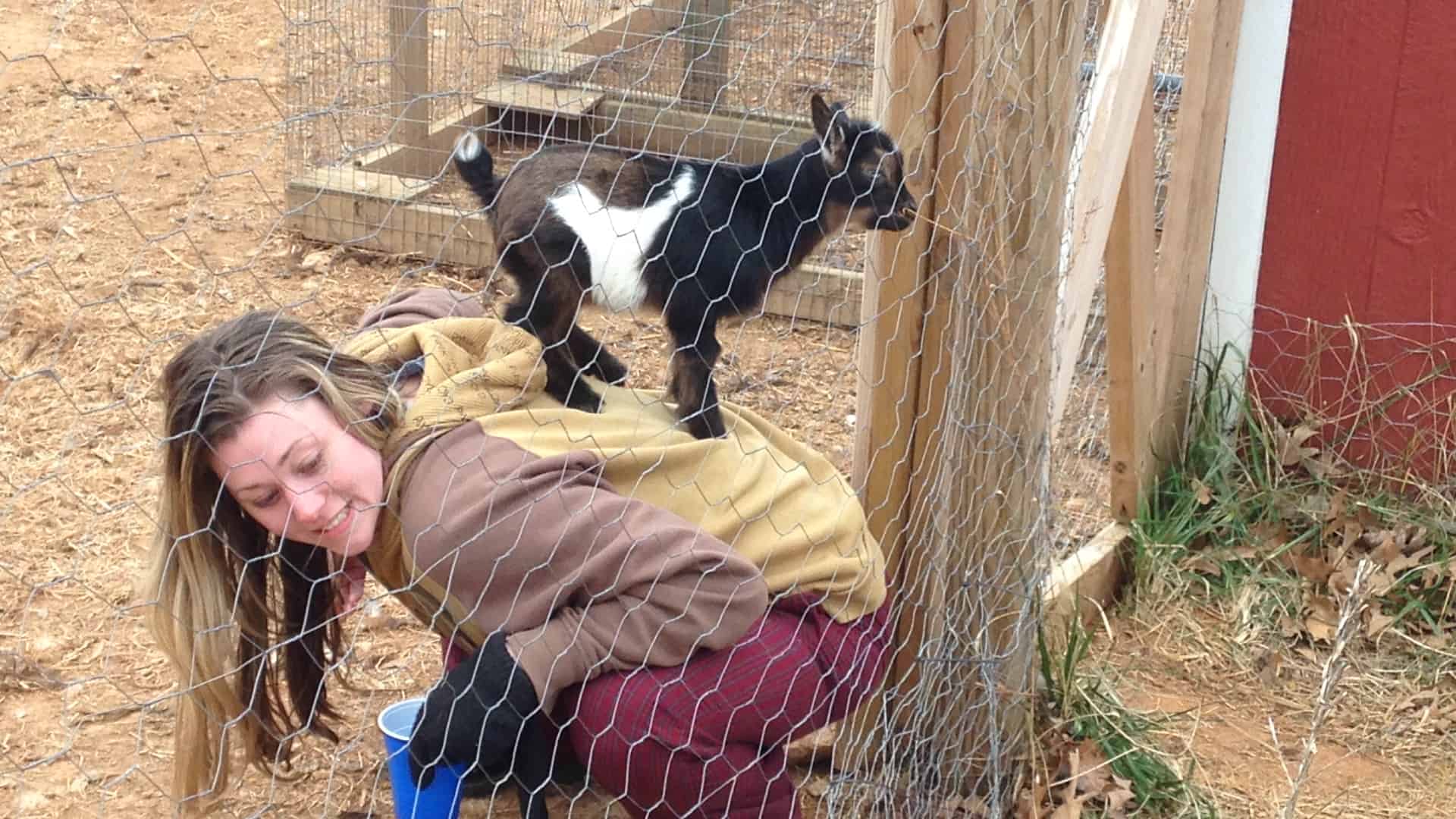
    baby goat Bauer climbing on top of Kristin's back
    (If you needed more proof of how much goats love to climb......here is Bauer as a baby using his humans as a climbing tower.)

    Since we obviously had some goats  in need of a little entertainment quick like, we decided to slap together a few goat toys based on what we had on hand.  We are now the proud owners of a few homemade toys for goats; a goat play bench and a goat pallet tower.

    Here are a few ideas for DIY & cheap toys for goats:

    Used playhouses make great toys for goats

    You can get them new (but they are rather expensive).  To get cheap play equipment, check out your local Craigslist or local yard sales.

    These plastic or wood children's playsets can commonly be found relatively cheap if you get them used.  Ones with ladders and slides are perfect toys for goats.

    Pallets make for endless fun toy ideas

    You can regularly find pallets for free at most any bigger store.  For example, our local farm store gives their used pallets away for free.  These work great for cheap toys for goats plus you are using recycled material so nothing goes to waste.

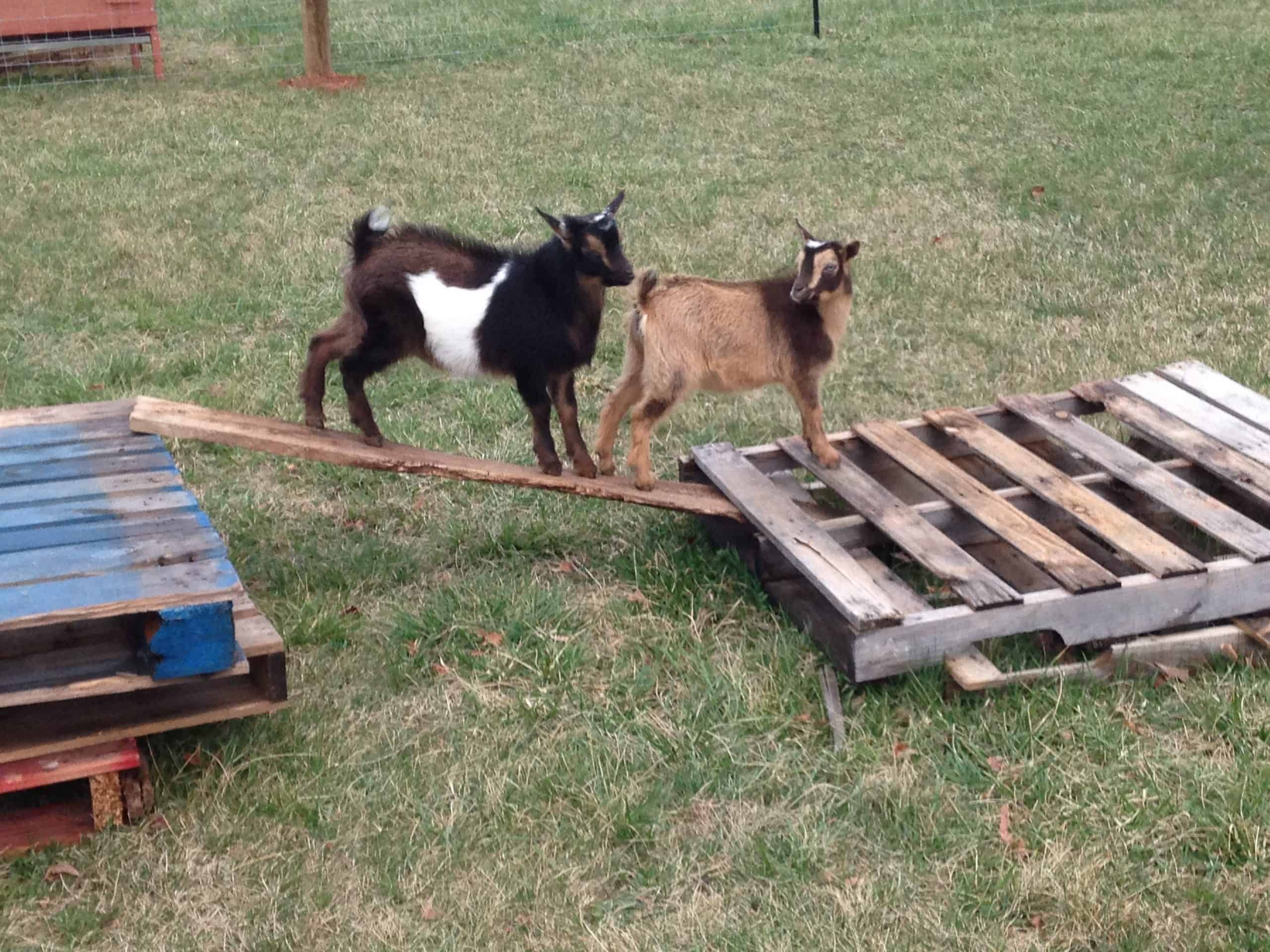
    You can leave the pallets in tact and stack them at various heights.  Put the stacks together in one pile so that the goats can climb from stack to stack.

    2 goats on a stack of pallets

    You can also add "bridges" by putting wood boards attaching stacks so that they can walk from stack to stack.

    Tables, benches; & other platforms: Perfect goat toys for climbing

    Another cheap fun toy idea is to take any scrap wood you have around from other building projects (such as chick brooders) and build tables, benches or other platforms for your goats.

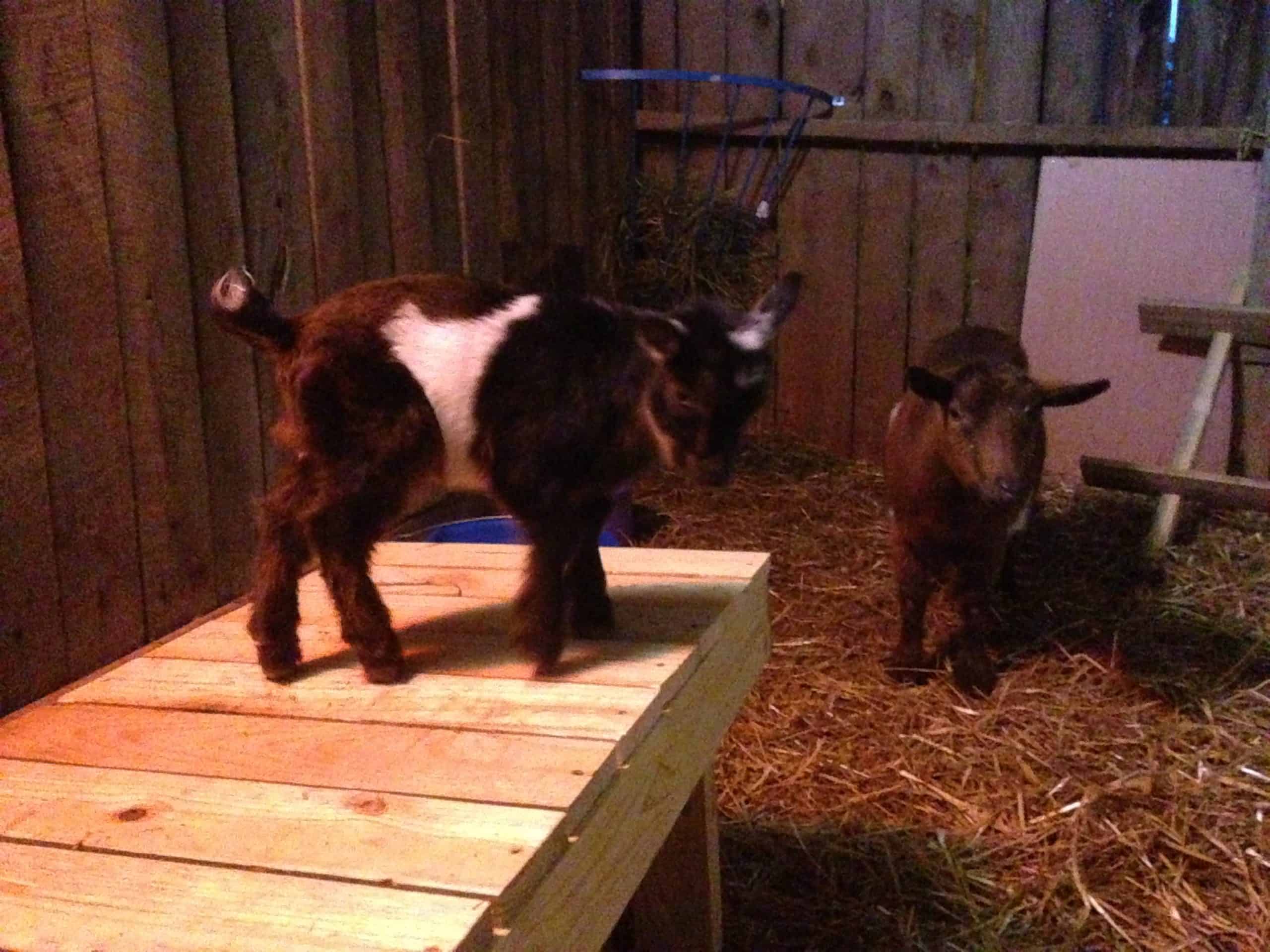
    baby goat on a milk stand

    We built a few simple benches to use as toys for our goats and they absolutely love them.  They jump up on them and the babies, like Bauer in the picture and this video, love to tap dance around on the top of them.

    Need some help to keep your goats healthy and maintained? The G.O.A.T Herd Management Binder has you covered from supplies to routine care reminders.

    Wooden Cable Spools: Goat toy training course!

    You can sometimes find these at hardware stores.  They will often times give them away for free if they are empty of whatever product was on them.  Electricians may be another place to source them.

    You can simply stack the wooden spools together for the goats to climb on.  Cascading different size spools make great fun toy obstacle courses. You can even create bridges between spools for extra fun goat toys!

    Large Rocks

    Again, anything goats can climb on make great goat toys. If you have any larger rocks on your property, you can make a rock playground.  You can also sometimes find people looking to remove them from their property.

    Often times they will give them away but you will have to do the work to remove them, transport them, and then place them on your property. We also suggest to bury half of them to prevent a rolling stone from squashing a tiny baby goat.

    The extra added bonus of using rocks is that the texture of the rocks will help keep the goats hooves worn down and you won't have to trim goat hooves as often. Which is great since that cuts down on the amount of herd health care you need to do.

    Since goats are great climbers and jumpers, you will want to make sure that you place any of the goat toys in the middle of their fenced in area so that they they don't climb up on the toys and then jump over the fence.

    Tire Goat Playground

    You can use old tires to make a tire goat playground. Simply collect tires of varying sizes. Then you can lay them flat so your goats can climb in them. You can stack them on each other so you goats can climb them like a ladder.

    Or you can sit them upright (make sure you secure them to the ground by digging a hole or some other way) and your goats can climb on top or walk through them like an obstacle course.

    Logs

    You can either cut your own logs if you have a lot of trees on our property, or you can get logs from someone else.

    You can bundle the logs together with thick rope so that they form a platform - try ones of different heights, so that your goats have to go and and down from log to log.

    Or, you can simply lay the logs on the ground and let your goats climb and jump off of them.

    Large Ball

    Goats have been known to like pushing large balls around. They will kick, headbutt, push and just generally knock the ball around.

    This is probably best used under supervision so your goat doesn't get injured, or pop the ball and decide to try and eat it. Because although there are a lot of things goats can eat, goats cannot eat plastic.

    Trampoline

    A trampoline is a great addition for your easy goat playground. You can find these of varying sizes used for cheap or free.

    Or, if you want to spring for a new trampoline, you can. You, your goats and your whole family can enjoy bouncing around.

    Brushes

    Sometimes, you might see your goats rubbing on branches, trees, or the side of their goat pen. They enjoy a good scratch.

    So, you can give them some intentional scratching post spots by tying a hard bristle brush up at a height that they can rub against.

    Seesaw

    As you know, goats like to climb. So, a seesaw can be a fun interactive toy for them.

    You can either make your own with a wooden plank over a log. Or, you can find used kids seesaws for free or cheap. Alternatively, you can also buy a new seesaw for your goats.


    FAQ

    What kind of toys do goats like to play with?

    Goats like to play with all sorts of toys, from anything they can climb on, to seesaws, slides, and balls.

    Do goats like to play with balls?

    Yes, some goats do like to play with balls.

    Do goats love to play?

    Yes, goats love to play. They like to run and play with each other as well as their human friends and any toys or interactive things you provide to them.

    Do you have any toys for your goats?  What goat toys does your herd like the best?

    If you need more help keeping your goats healthy and well taken care of, check out the G.O.A.T. Herd Management System - worksheets, calculators, supply management and more to keep your goats in tip top shape while cutting down on time.

    Access the G.O.A.T. Herd Management System Here

    Winter Squash - 5 Types of Winter Squash You Should Grow

    By MrAnimal Farm

    I am going to admit this here, but pllllease don't laugh.  When we were thinking about our first garden, I thought winter squash had to grow in the winter.  I didn't read the seed packages and I learned later....too late for that season....that isn't exactly how winter squash got it's name.

    feature image for winter squash. variety of qinter squash on counter top

    Winter squash come in several different varieties.  And as I found out the hard way, winter squash is not actually grown in the winter. It is grown through the summer and harvested in the Fall.  However, it can typically be stored (if in the proper conditions) through the winter.

    Winter squash, unlike all of the types of summer squash, is harvested when its skin is hardened.  This trait is what helps it to be able to be stored for a period of time - ya know, like through the winter. But, like summer squash, they are a vegetable that is actually a fruit (botanically speaking).

    There are so many types of winter squash, you really can plant a wide variety of the squash in your garden to get various shapes, sizes, colors and tastes.  We always factor in a lot of room in our garden for squash when we do our garden planning.

    Both Winter and summer squash are so versatile, they are a must for any good vegetable garden.  You can use squash in so many different recipes  - they can be the main dish or they can substitute for a more starchy ingredient.

    Really, you can't ever have enough!

    Here are 5 types of winter squash that are great to grow:

    1. Acorn Squash

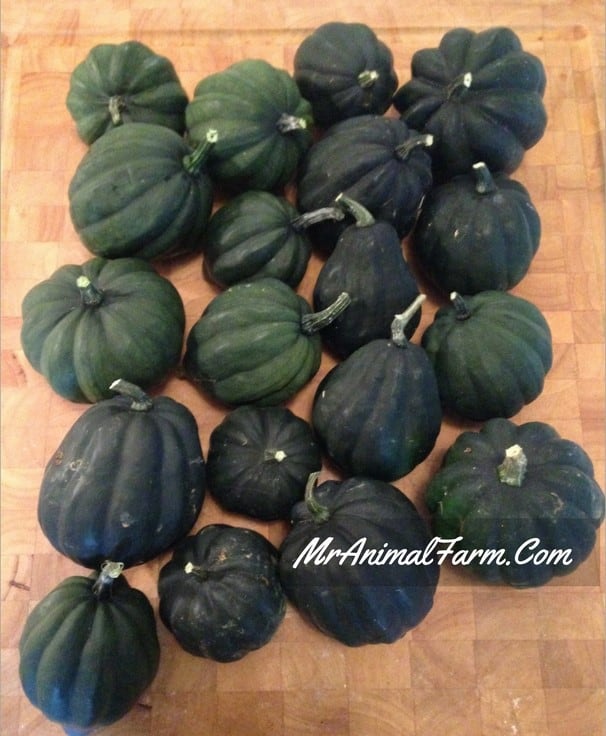
    Acorn squash is a small, acorn shaped squash.  They are a deep, dark green in color and will develop one orange spot on their outer rind.  Acorn squash have a sweet flavor.

    acorn squash

    They are delicious when baked and can be prepared similarly to sweet potatoes. Add a little butter, cinnamon, and brown sugar and you will not be sorry you added these to your garden.

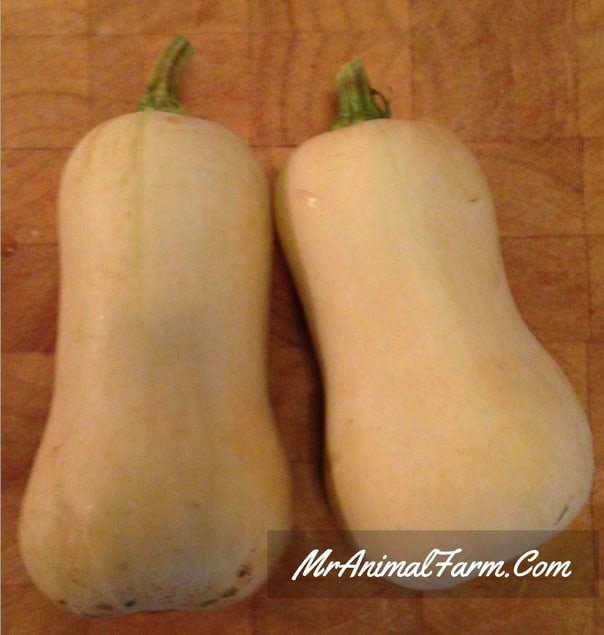
    2. Butternut Squash

    Butternut squash is a medium sized squash.  They are shaped sort of like a bell (smaller at top and larger and rounded at their bottoms).  They are a pale beige color on the outside.

    butternut squash

    Butternut squash are great in soups.  They also are delicious just simply baked like acorn squash.

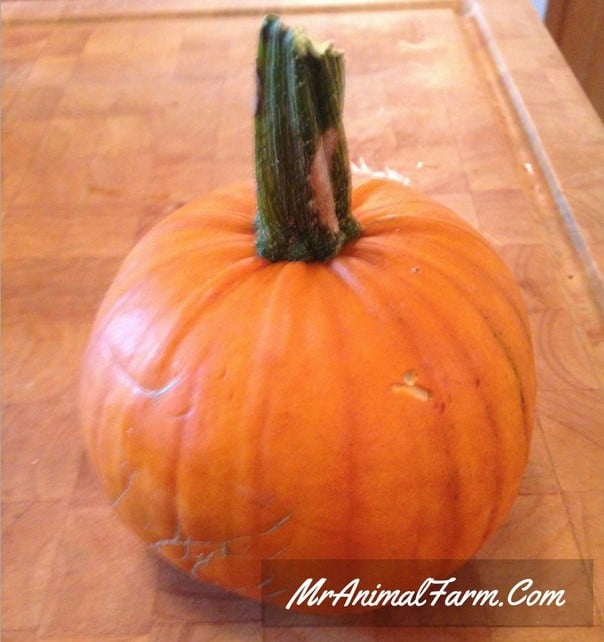
    3. Small Sugar Pumpkin

    Small sugar pumpkins look like what you are probably imagining.  They are a small (around 5 pounds), orange pumpkin.  These small sugar pumpkins are fantastic for making pie filling.

    small sugar pumpkin

    You can grow several, bake them up, scoop out their flesh and freeze it to use throughout the year in pies.

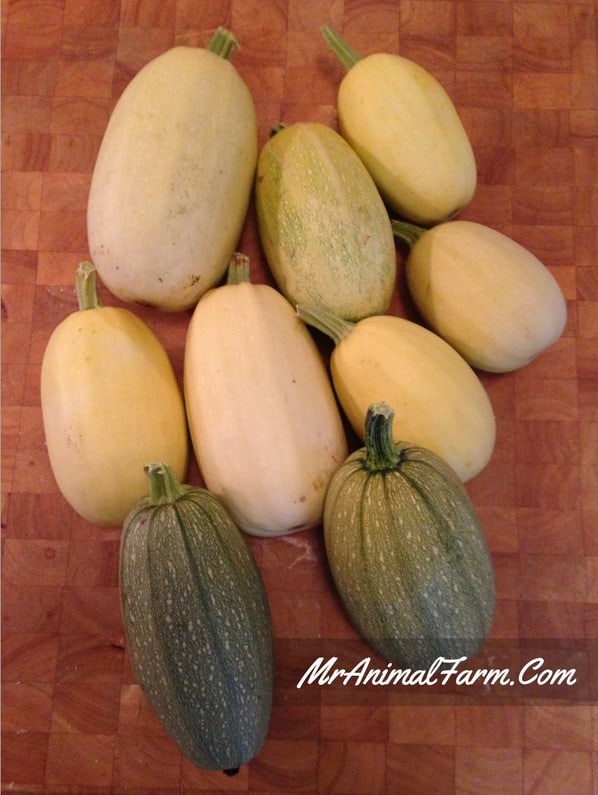
    4. Spaghetti Squash

    Spaghetti squash are maybe the coolest of the winter squash.  Like their name would lead you to believe, their flesh when cooked scoops out and looks like spaghetti noodles.

    Growing spaghetti squash is relatively easy to do also.

    Spaghetti squash is great for using in place of noodles in any dish. And you can freeze spaghetti squash for use when it is out of season.

    spaghetti squash

    It has a more bland flavor than some of the other winter squashes, so just add in the flavors you want in your dish and this squash will take those on.

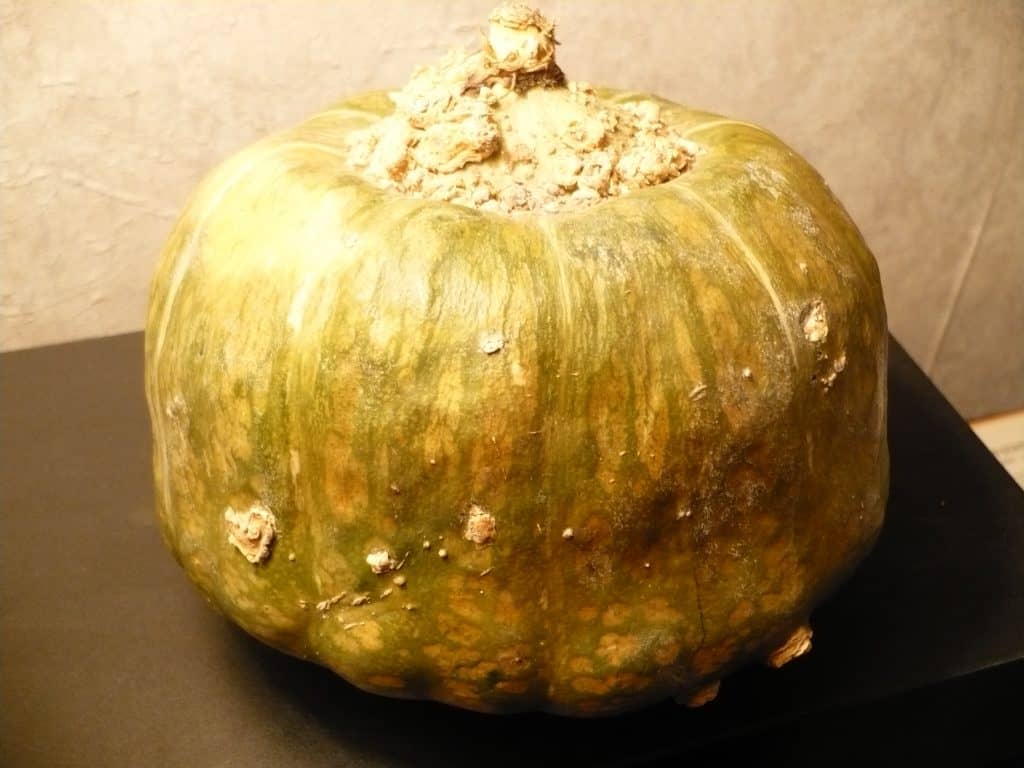
    5. Buttercup Squash

    Buttercup squash are smaller squash (around 4 pounds or so) with a dark green outer rind.  Their outer rind also has some yellow-ish stripes on it.  Buttercup squash are great for baking or steaming.

    buttercup squash

    User:Badagnani [CC BY-SA 3.0 (http://creativecommons.org/licenses/by-sa/3.0) or GFDL (http://www.gnu.org/copyleft/fdl.html)], via Wikimedia Commons

    What are your favorite types of winter squash?  Drop us a comment below and let us know!

    Need More Gardening Tips?

    [pt_view id="5f37129sdf"]
    Homestead Planning - What Will the New Year Bring?

    By MrAnimal Farm

    Homestead Planning - What Will the New Year Bring

    At the end of each year we like to reflect on what we accomplished - both success and failure.  We also like to do some homestead planning.  That way we go into the New Year with a solid plan on what we want to get out of our homestead.

    Homestead Planning - What Will the New Year Bring

    With this year almost over a new year will be here before you know it!  For us here at MrAnimal Farm, last year brought a lot of new challenges.  We grew our goat herd by several does, we made some DIY chick brooders, as well as new stall area and fencing for the goats.

    Homestead Planning - What Will the New Year Bring

    Among all of the growth, there were also some failings.  Our Spring garden was not nearly as successful as in past years.  And we found that with all the growth, it left us with little time for regular tasks.

    ...

    Read More

    Zucchini Nachos - Healthy & Delicious

    By MrAnimal Farm

    zucchini nachos

    Why Zucchini nachos?  Well, we LOVE Zucchini.  It is a pretty prolific producer each year (as long as you miss the squash bugs and squash vine borers).  We always end up with too much to use it all, so much of it goes in the freezer.

    zucchini nachos

    Zucchini Nachos - the perfect alternative to starchy chips

    You can never have too much zucchini since it can be substituted in to so many foods instead of starchy items.  One of our favorite zucchini recipes is zucchini nachos. (If you like these, try out our zucchini lasagna, zucchini bread, and zucchini noodle casserole too!) If you haven't already, you can also try growing zucchini on your own.

    Here's how to make the zucchini nachos:...

    Read More

    How to Transplant Started Plants

    By MrAnimal Farm

    transplanting plants

    The first year that we started plants inside, it felt like a huge task transplanting plants from their little tray pods and into the ground safely. I mean, they look so fragile.

    transplanting plants

    What if we break them?  Or what if we pull their little leaves off getting them out of their pods?  What if they don't grow once they are set in the ground?  There were so many questions that need answers.  But, it turns out that it really isn't that hard.

    Here are some tips for successfully transplanting plants you started inside:

    1.  Harden them off

    Since your plants have been living their entire lives indoors, they are not used to the harsh world of direct sunlight and wind.

    Because of this, your plants will need a period of time to develop their strength. This is called hardening them off.

    How to Transplant Started Plants

    You can do this by slowly allowing them a little outside time each day for a while before transplanting them.

    Alternatively, you can use a fan and shop light setup (as described in how to start plants inside) to get them use to light and wind. Then, when they are ready to go outside, it is a much smoother transition.

    2. Prepare the transplant site

    Make sure that you prepare the garden area into which you will transplant.

    You can get it ready by marking the area off (we use the square foot gardening method). Tilling the area (using a tiller which is one of the highly recommended gardening supplies), or at least breaking up the soil as much as you can. An pre-watering the ground so that it is a welcoming environment for your plants.

    If you have already tilled, and watered and fully prepared the area, it will just make it much easier to be able to go out and get your started plants in the ground without having to worry about all of the other setup.

    3. Make sure they are ready

    Make sure that the plants are old enough/big enough for transplanting.  I know as soon as we saw the green of leaves sprouting, we were excited and ready to take our seedlings outside. This would be a huge mistake. The first leaves are just the initial way the seedling can collect light so that it can grow.

    What you are really waiting for is for the plant to develop it's "true leaves". They should have at least two true leaves.  It is pretty easy to tell what a true leaf is, the first leaves the plant has look very generic, the true leaves will look "true" to what the adult plants leaves will look like.

    How to Transplant Started Plants

    Once you see at least two true leaves and the plant is a decent size, it is ready to go outside!

    4. Use the correct tools

    Your job will be infinitely easier if you have the correct tools. It's easy to think you can just make due with what you already have (and that's okay to do if your situation does not permit you to buy more tools right now). However, you will thank yourself, in the long run, for having the correct tools for the job.

    If you are using the square foot gardening method, you can either make a grid or purchase on to divide up your planting area. Our first year, we had a system of broken sticks and twine that we moved from box to box to make sure everything was even (it took FOREVER!).

    You will need a small spade to dig a hole that is big enough to hold your started plant.  You will want to make sure that the entire root system will fit into the hole.

    You can also use an optional watering canister. The garden hose can be a bit too powerful for newly transplanted plants so we opt for a gentler watering method.

    5. Free them from their pod

    Gently pinch the bottom of the pod that the plant is in to help loosen it.  Once it is loose, you can gently pull the plant from the starter pod.

    6. Loosen the soil

    Very gently break up the soil ball a little on the started plant so that it's roots can easily take root in it's new home.

    7. Cover up

    Once the root ball is in the hole, you will need to cover it up. Using your spade (or your hands, if you prefer to get dirty) cover the root ball up with new soil.

    Gently pack it down so that the plant is secure in it's new place.

    8. Give it a drink

    As I said earlier, the standard garden hose will be too powerful for your new transplants.

    How to Transplant Started Plants

    Using a watering canister, lightly water your newly transplanted plants.

    What plants will you be transplanting this year?

    We Have More Gardening Tips For You Here

    [pt_view id="5f37129sdf"]

    transplanting plants

    Garden Planning - 4 Basic Things to Know to Start your Garden

    By MrAnimal Farm

    garden planning

    Four Garden Planning Basics

    Even though Spring and Summer garden seasons are over, and we are not planting a Fall garden this year, we are thinking about our garden planning.  We usually start garden planning for our Spring garden in the late Fall/early Winter.

    Having a solid plan for the garden well ahead of time to actually plant just makes things run so much smoother.

    Here are our top 4 garden planning basics:

    1)  How much space will you have?

    This is the first, most important thing to decide since your space will dictate how much you can actually plant.  We do a version of square foot gardening.  Therefore, we know how many boxes we have set up.

    This makes it super easy for our planning as we can just decide how many boxes (or ½ or ¼ boxes) of each thing we want.

    But, depending on your available space, you may want to do container gardening, create a victory garden or just have a huge area of standard garden rows.

    garden planning

    2)  What types of plants and how many of each?

    Now that you know how much actual space you have to plant in, you can make your wish list of plants.  Making your crop list is probably the most fun part of garden planning.

    We have a few yearly "go-to's" including growing zucchini, growing yellow squash, several types of tomatoes and several types of winter squash.  Each year, we usually then add in something new and fun -- this year we did lemon cucumbers and chocolate peppers.

    garden planning

    When deciding how many of each plant you will want or need, some things to think about are:   how much does that plant typically produce, how much do you like it, will you want to preserve or freeze some to last through the year.

    3)  Where will you get your seeds?

    Ok, so you might think it's too early to buy your seeds.  However, we have found that we can often times get some AWESOME Black Friday deals from Grow Organic.

    These sales make it TOTALLY worth having your seed order pre-made so that if you catch a great deal you are prepared to take advantage.

    garden planning

    4)  Expansion ideas?

    Fall is a great time to build new infrastructure if you'll need it.  Since you've already figured how much space and what you'll grow, you can now add new boxes, trellising, etc.  We made the grid below but you can also buy one.

    garden planning

    Or, if it is your first garden, you can get all of those items set up.  Other things to think about are if you have berry patches or fruit and nut trees as the Fall can be a great time to order those too!

    You Might Also Like:

    [pt_view id="5f37129sdf"]

    Gluten Free, Sugar Free Apple Pie - Delicious & Easy!

    By MrAnimal Farm

    Gluten Free, Sugar Free Apple Pie

    I grew up on apple pie made by my grandmother, some of my best memories involve her delicious apple pie.  So, when we first made a change to our diet several years ago that involved cutting out gluten and sugar, it seemed a little devastating.  I mean, who doesn't need a good pie or a plate full of macaroni and cheese once in a while?!

    What would we eat to celebrate birthday's, triumphs and other happy occasions?  And what would we eat when we just needed a little bit of happy comfort food?

    Neither of us claim to be the best cooks in the world, but with time and using resources such as Elena's Pantry we have found a lot of recipes that help satisfy those cravings, celebrate the good times and ease the bad times.

    Gluten Free, Sugar Free Apple Pie

    ...

    Read More

    How to Build a Feed Bin - with 3 Easy Steps!

    By MrAnimal Farm

    build a feed bin

    build a feed bin

    What the heck do you do if you walk into your barn in the evening, open up a cabinet drawer and a NEST FULL OF BABY MICE jump out at you?!  Well, if you are me, then you squeal and run out of the barn.  Compose yourself and then peak your head back in to see if they have all magically gone away.  After all, the chickens and goats aren't going to feed themselves.  And (gulp) their feed is in there - WITH THE MICE!

    This was my realization that we NEEDED a feed bin.

    If you have animal feed sitting around, you will eventually need a feed bin.  You can buy feed bins or metal trash cans.  But if you have a lot of feed to store, those options can get costly.  A cost effective (and customizable) solution is to learn how to build a feed bin....

    Read More

    Seed Starting - How to Start Plants Inside

    By MrAnimal Farm

    start plants inside

    start plants inside

    So, gardening season is upon us and we can't wait to get things growing!  There's hardly anything better than going outside, picking a fresh vegetable and bringing it in to use for dinner.  Starting plants inside (called seed starting) is a great way to get a jump start on the growing season and also for some plants that need longer growing times to production.

    Growing our own food is part of how we save $2500 per year homesteading!

    The first time we started plants inside, it felt so very overwhelming. (If you need some help transplanting your started plants, we have you covered.)

    There are a ton of decisions, what kind of soil to use, what containers to use, where to put them.  And, well, despite a ton of reading and research, the result  - an epic fail.  I am talking, all of our plants died within a few weeks.  Seed starting shouldn't be difficult, but it can be.

    After trying a lot of different things, we have come up with a seed starting system that is reliable and works well.  So, here is how you can start plants inside successfully!

    This year we will be starting broccoli, cauliflower, a few types of peppers and tomatoes inside.

    Supplies you will need to start plants inside:

    We like to use Jiffy Starter Trays like this.  They are easy to use, accommodate a lot of seedlings and are easy to move around.

    We like to grow our garden using organic standards, so we use an OMRI rated potting soil.  The one we like the best is Black & Gold found here.

    You will need seeds (of course)!

    A shoplight which can be found at your local hardware store or online.

    Lastly, you will need a small fan.

    You should also make sure you have all your other gardening supplies ready for the season because those it will be time to transplant the started plants sooner than you think.

    How to Start Plants (or seedlings) Inside

    After trying several setups, we know what works best is a simple shop light hung from the ceiling (the chains allow you to adjust it up and down as the seedlings grow) and a small fan that clips to the end of the board that the trays are on.  This allows the seedlings to get direct light and also get wind on them so that they are hardened off when you take them outside.

    First, we take our starter tray and fill with potting soil.

    Then, we make sure to tap the soil down to get all air bubbles out.  It does not have to be packed super hard, but should be somewhat packed.

    We then poke a small hole in each pod (depth varies by seed type and the seed package label will tell you what to use).

    We add a few seeds to each hole (not all will sprout and not all seedlings will make it to planting).

    Finally, we then cover the seeds with soil, add water and cover the tray with the top.

    After a few days (time varies by seed type), you will see the seedlings peaking out through the soil.  Once you see sprouts, you can remove the lid.

    At this point, we turn the fan on to help the seedlings get strong stems.

    Each day we check the soil to determine if they need water.  Also, daily, we either turn the trays or move the fan from one end of the set up to the other so that they get a breeze from both directions.

    As the seedlings grow, you can move the shop light up so that they do not get burned.  Once each seedling has 2 true leaves, they should be ready to take and transplant outside.

    We would love to hear what plants you will be starting inside!  Leave us a comment below.

    For More Gardening Fun, Check These Out

    [pt_view id="5f37129sdf"]

    How and Why to Quarantine New Animals

    By MrAnimal Farm

    Quarantine New Animals

    Quarantine New Animals

    Why Should You Quarantine New Animals?

    It is always exciting when we bring new animals to the farm.  However, it is important to make sure that they are integrated properly.  This will prevent any of the animals already on the farm from getting sick.  Even animals that appear perfectly healthy at their current homes may start to present with sickness after a move.  This is due to the stress and new environment.  With chickens, common things that might come up are respiratory illness and coccidia.  With goats, things like coccidia or worms.  Chicken lice and Mites can also be brought in by new animals.

    How Do You Quarantine New Animals?

    ...

    Read More

    5 Ways to Tell if a Chicken is Still Laying

    By MrAnimal Farm

    Signs Chicken Still Laying

    Chickens are hatched with a set number of eggs for their lifetime.  This means that at some point, if they live a long life, they will stop laying completely due to not having any eggs left. So, here are the 5 ways how to tell if a hen is still laying.

    The 5 ways to tell if a chicken is still laying eggs are: comb and wattle color, leg and feather color, vent appearance, separation and food coloring.

    You may also wonder:  Do roosters lay eggs?

    jublilee orpington chicken text says is your hen still laying

    Of course, they don't just go from laying like gangbusters, to not laying at all. When chickens start laying eggs and how often chickens lay eggs can depend on a variety of different factors.  But typically,  you will see a slow decrease over time.

    If you have had your chickens for a while and are getting less eggs than before, you might be wondering why.  Well, you could have a number of factors at play.

    There are, of course, other causes of decreased egg production that actually are chicken health issues.  However, it may well be because a chicken is simply no longer laying.

    How long do chickens lay eggs? Chickens typically lay well for the first 2 or so years and slowly decrease. Most stop laying by 5 - 6 years of age.

    Keep reading below to find out the details on how to identify the signs your hen has stopped laying eggs.

    Here are 5 ways to tell if your chicken is still laying:

    1)  Comb & Wattles

    A hen that is still laying will have bright red comb and wattles, while a hen that is no longer laying will have a paler and shrunken appearance.

    marans on top of coop

    2) Legs & Feathers:

    A hen that is still laying will be lacking in color in her legs.  And a hens that is still laying will have feathers that tend to look a bit more disheveled.  This is because she is using all of her nutrition to put towards egg production and not "looking pretty".

    Keep in mind that chickens do molt at least once a year and this will usually cause them to stop laying for a period of time. But they should start back up once their molting is over.

    It is important to keep track of your chickens so that you can tell the difference between molting, dull feathers or some other issue.

    chicken with missing feathers from molting

    So, if you have a hen that is starting to look bright and fancy again, you might consider that is a chick that is no longer laying eggs.

    3)  Vent:

    A hen that is still laying will have a large, moist vent. (Ya know, because she has to squeeze out eggs every day!)  You should be able to fit about three fingers between her pubic bones.

    A hen that is not laying will have a dry, small vent and her pubic bones will be much closer together.

    Need some help keeping your chickens health and care taken care of? Check out the Organized Chicken Keeper for an easy to follow system.

    4) Separation:

    Of course, looking at a hens appearance can give you good indications on if she may still be laying.  However, it won't give you a definite answer.

    two orpington hens in a crate

    If you have the space, you can also always separate a hen for a few days to her own area to see if she produces any eggs.  What we do is use a dog crate and give her food and water for a few days.  This really a sure fire way to know if a chicken is still laying eggs or not.

    5)  Food Coloring:

    You can also put a dot or two of food coloring on a hens vent, that way when she lays you should see some of the coloring on her eggs.

    Do  you have anything you look for to tell if your chickens are still laying?  If so, let us know in a comment below.

    If you need more help with taking care of your chickens, check out The Organized Chicken Keeper for a complete system for managing their health through keeping their supplies stocked and coop clean.

    Access The Organized Chicken Keeper Here

    Goat Terminology - Key Goat Terms You Need to Know

    By MrAnimal Farm

    Goat Terminology

    If you are just starting with goats, or even if you have been around goats for a while, there will often be times you run across terms that you just don't know what they mean.  Goat terminology is important to know and understand especially when you are just getting started with goats.

    Keep reading to find out everything from what baby goats are called to what scurs are.

    baby goat laying in grass

    Common goat terminology:

    First, let's review goat terminology that refers and identifies a goats sex.

    • Wether - a wether is a male goat that has been fixed and cannot mate.  They make great pets.
    • Buckling - an intact male goat under one year of age.
      Buck- a buck is an in tact male goat over one year of age. They tend to be a little yucky as they have a whole slew of behaviors to attract girls 🙂
    • Doeling - a doeling is a female goat under one year of age.
    • Doe - a doe is a female goat over one year of age.

    Need some help to keep your goats healthy and maintained? The G.O.A.T Herd Management Binder has you covered from supplies to routine care reminders.

    Goat Medical Terminology

    Below you will find some common goat medical terms so that you can understand the health and well-being of your goats. Once you know these, you can use your goat medical supplies to take care of any issues.

    • Scours - this is basically diarrhea.
    • Banding  - this is a way of fixing a male goat.
    • CL/CAE/TB/Johne's/Brucellosis -  all diseases that goats can get, most of which can be tested for to make sure your herd is clean.
    • Cocci - a sickness that can cause diarrhea.
    • Abscess - this is a boil filled with pus. It can be an indication of CL.
    • CDT - this is a vaccine used annually to protect goats against Clostridium perfringens type C + D as well as tetanus.
    • Famancha - this is a scoring based on the color of a goats eyelid which indicates how anemic they may be.
    • Drenching - this is when you dose a goat with a liquid medicine.

    Goat Anatomy Terminology

    Here are common terms used when talking about goats anatomy.

    • Scurs - these are small pieces of horn that have grown back or were not fully removed at disbudding.
    • Disbudded - this is a goat who has had it's horns removed at a young age.
    • Rumen - part of the goats digestive system.
    • Udder - this is the part female goats that hang between their back legs; it is their mammary gland.
    • Wattles - these are loose pieces of skin and tissue that hang from the sides of a goats neck; only some goats have them.

    Goat Kidding Terms

    If you will be breeding your goats, then you will want to know these terms used about kidding and breeding so that you are fully prepared for goat kidding and taking care of your baby goats.

    • Bottle Baby - this is very much what it sounds, it is a baby goat that is being bottle fed instead of staying with it's mom.
    • Open - this is a term describes female goats that are not pregnant.
    • Polled - a goat who is polled is naturally hornless.
    • Weaned - this is when a baby goat is no longer nursing from it's mom.
    • Rut - this is when bucks are ready to breed.  They will go through periods of time when they have a lot of hormones raging.
    • Kidding - when a goat has babies.
    • Freshen - to come into milk.  For example, a First Freshner is a goat who is milking for her first time.

    FAQ:

    What are baby goats called?

    Baby goats are called kids. However, if you want to specify their sex girl baby goats are called doelings and boy baby goats are called bucklings.

    What are female goats called?

    Female goats are called doelings when they are young and does once they hit maturity.

    What are male goats called?

    Male goats are called bucklings when they are young and in tact, bucks once they hit maturity if they are in tact and wethers if they are fixed or castrated.

    What do you call a group of goats?

    A group of goats is called a herd.

    Did we miss any goat terminology that you need to know about?  If so, drop them in the comments below and we will help you out.

    If you need more help keeping your goats healthy and well taken care of, check out the G.O.A.T. Herd Management System - worksheets, calculators, supply management and more to keep your goats in tip top shape while cutting down on time.

    Access the G.O.A.T. Herd Management System Here

    How to Square and Level a Building

    By MrAnimal Farm

    How to Square & Level a Building

    Running a mini-farm, or even just owning a few farm animals will mean needing shelter and housing.  Often times, this will mean you will need to build things.  For example, a stall, a chicken brooder, a door for a run.  One of the things that we struggled with at first (having no building experience) was how to make sure the base of everything was square and level.

    If you do not square and level your building, you will end up with walls not lining up, roofs not fitting correctly, doors and windows not opening right....it really can cause serious issues.  For a first time builder, squaring and leveling can seem overwhelming, but both are really easy to do.

    metal building base with text how to square and level a building

    How to Square and Level A Building

    Here are some quick tips to get your structure in tip top condition.

    How to Square a Buildings Base

    Making sure a base (or wall or door) is squared is really simple.  Once you have your pieces cut (or put together), you want to ensure that the diagonal corner measurements are equal.  To do this, all you need to do is measure diagonally from one corner to the other and then measure diagonally from the other corners.  When the measurements are equal, then your base is square.

    If you are working with a metal base screwed together (so there is some movement in the sides), you can put the base together, measure, and then simply pull the corners as needed to get the measurements to be equal.  If you are nailing wood pieces together (so there will be no movement), you will need to lay the pieces out first, make the measurements and then you can adjust (or cut) as necessary to ensure that the measurements are equal.

    If you found this helpful check out, The Fruitful Homesteader: A Goal Setting and Project Planning System so that you can get your homestead working for you.

    Click Here to Access the Planning System

    How to Level a Buildings Base

    Leveling a base is perhaps even more simple that squaring.  You can use a small speed square with a level in it, or you can use a carpenters level.

    Once you have you base squared, you will put the level in the middle of one of the sides.  If the bubble does not fall in the middle of the lines, you will need to raise or lower the far sides/corners of the structure.  One easy way to do this for a base is to use small landscaping stones.  Simply add and remove them until the bubble on the level falls in the middle of the lines.  You will need to check this on each of the four sides of the structure.

    • « Go to Previous Page
    • Go to page 1
    • Interim pages omitted …
    • Go to page 6
    • Go to page 7
    • Go to page 8
    • Go to page 9
    • Go to Next Page »

    Primary Sidebar

    kristin, justin and goat

    Hey, we are Justin & Kristin! Welcome to MrAnimal Farm where we share our knowledge on homesteading, livestock and poultry, gardening and food preservation

    More about us →

    Popular Posts

    • Differences Between Ameraucana, Aracana and Easter Egger Chickens
      The Araucana Vs Ameraucana Vs Easter Egger Chicken
    • Chickens That Lay Green Eggs - What Chickens Lay Green Eggs
      Chickens That Lay Green Eggs - What Chickens Lay Green Eggs?
    • brooder box for chicks
      Chick Brooder Plans - How to Build a Brooder in 3 Steps!
    • Curled toes in Chickens
      Curled Toes in Chickens - Causes and Treatment
    • Goat Toys
      DIY Goat Toys: Cheap Toys to Keep Your Goats Busy
    • hen or roo
      How To Sex A Chicken & Tell A Hen From A Rooster

    Fall Homesteading

    • Fresh carrots and beets being held over a wooden table.
      15+ Fall Garden Crops For a Longer Harvest
    • Molting Chickens
      Molting Chickens - What, Why & How to help!
    • two butternut squash on a wood board
      Can You Freeze Butternut Squash ?
    • Goat Breeding Planning - Using ADGA to Make the Right Matches
      Goat Breeding Planning - Using ADGA to Make the Right Matches

    Footer

    Amazon Affiliate Disclosure

    We are a participant in the Amazon Services, LLC Associates Program, an affiliate advertising program designed to provide a means for sites to earn advertising and linking to Amazon.com. As an Amazon Associate we earn from qualifying purchases.

    Privacy Policy

    For details on our privacy policy click here.

    Copyright © 2026 · MrAnimal Farm